The Healing of Rose Verrechia at Lourdes
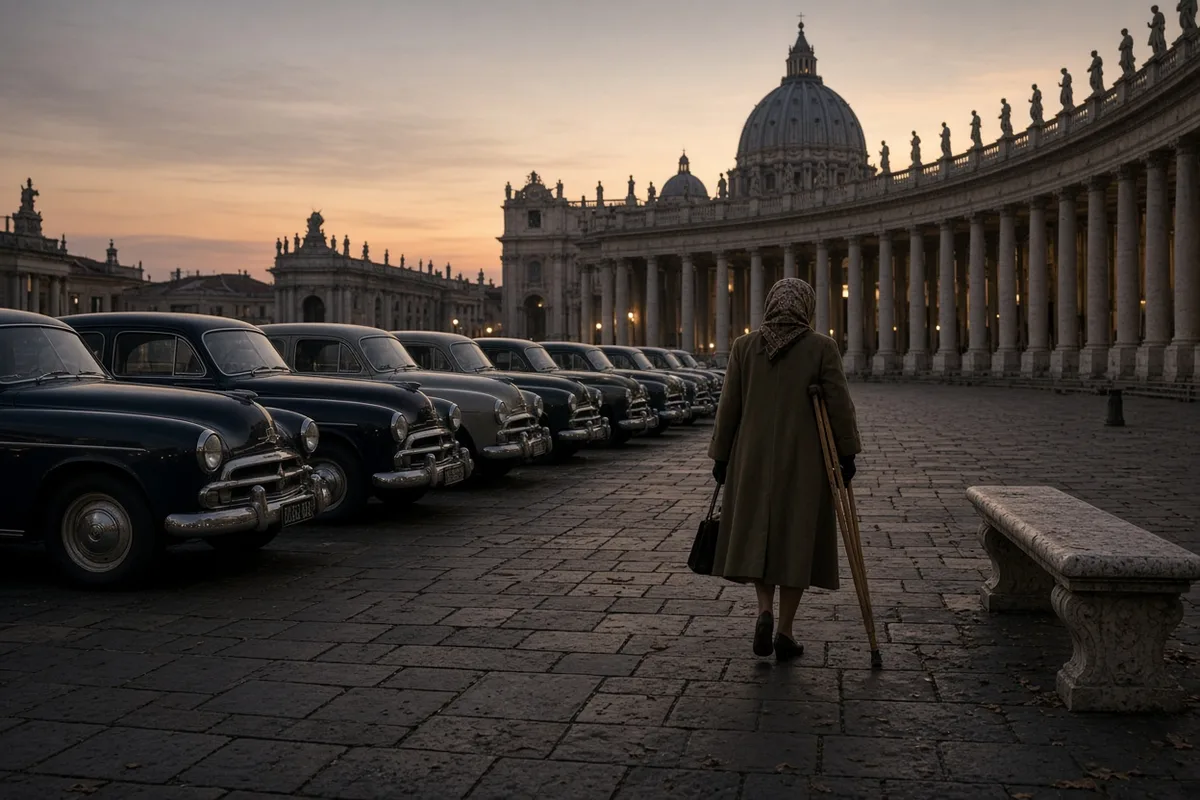
I stood at the edge of the square where the invalid carriages lined up, the August sun already hot on the stone. A woman in a dark dress sat propped against cushions, her head turning at every sound though her eyes stayed fixed and empty. Her daughter walked beside the wheels, one hand steady on the frame. The doctor who had come with them from Vendée kept checking a small notebook, his pencil moving even as the bells began.
Marie Biré had been blind for six months. The notes the doctors carried said bilateral optic atrophy, white atrophy of the nerve, nothing to be done. She had lost two children four years earlier and then the sight had gone after the vomiting and the arm that turned dark. Now the carriage stopped near the grotto rail and two attendants lifted her onto a bench. She kept one hand on the daughter’s sleeve.
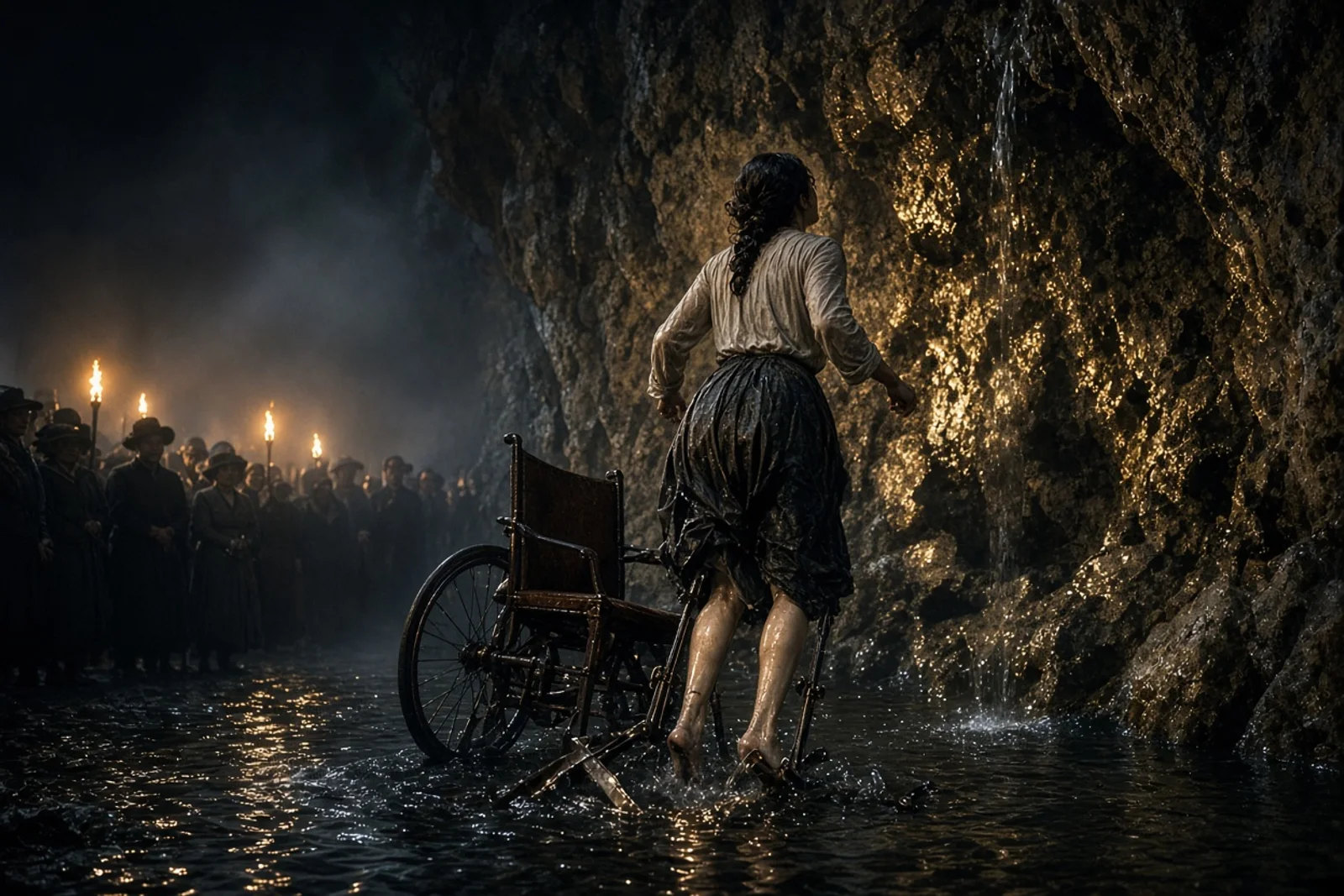
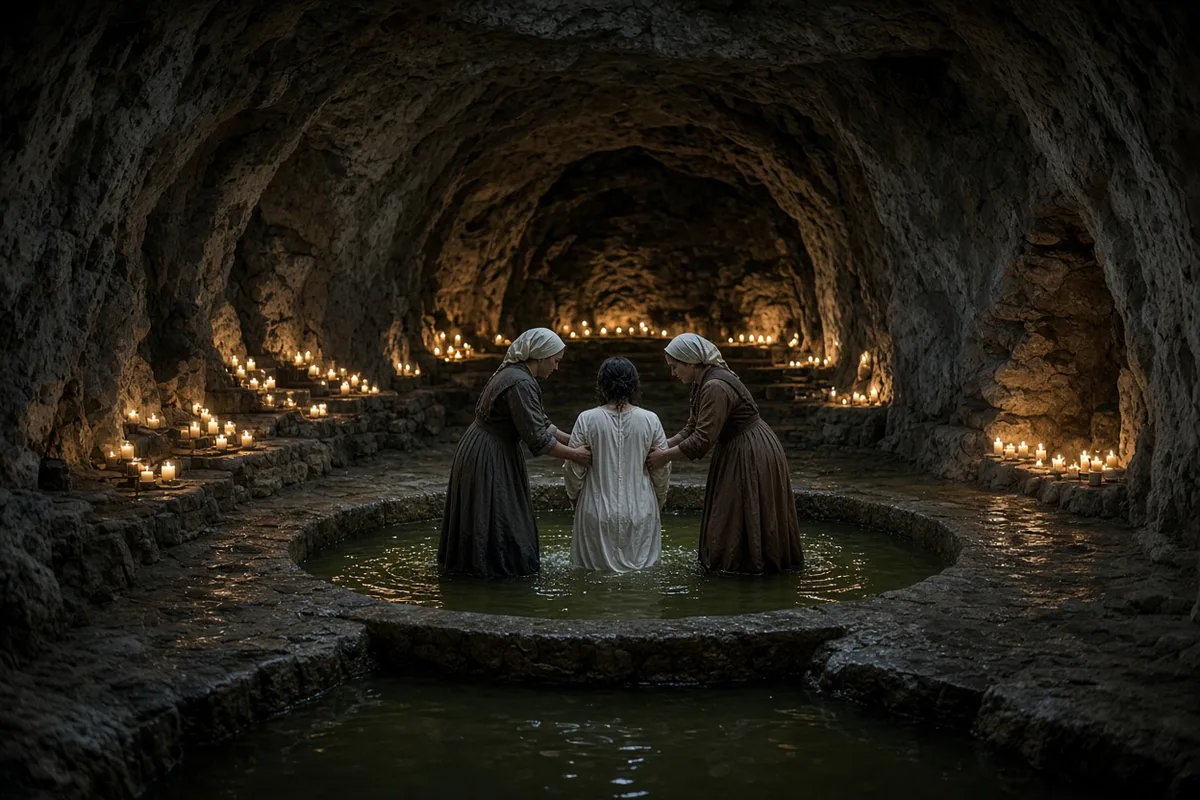
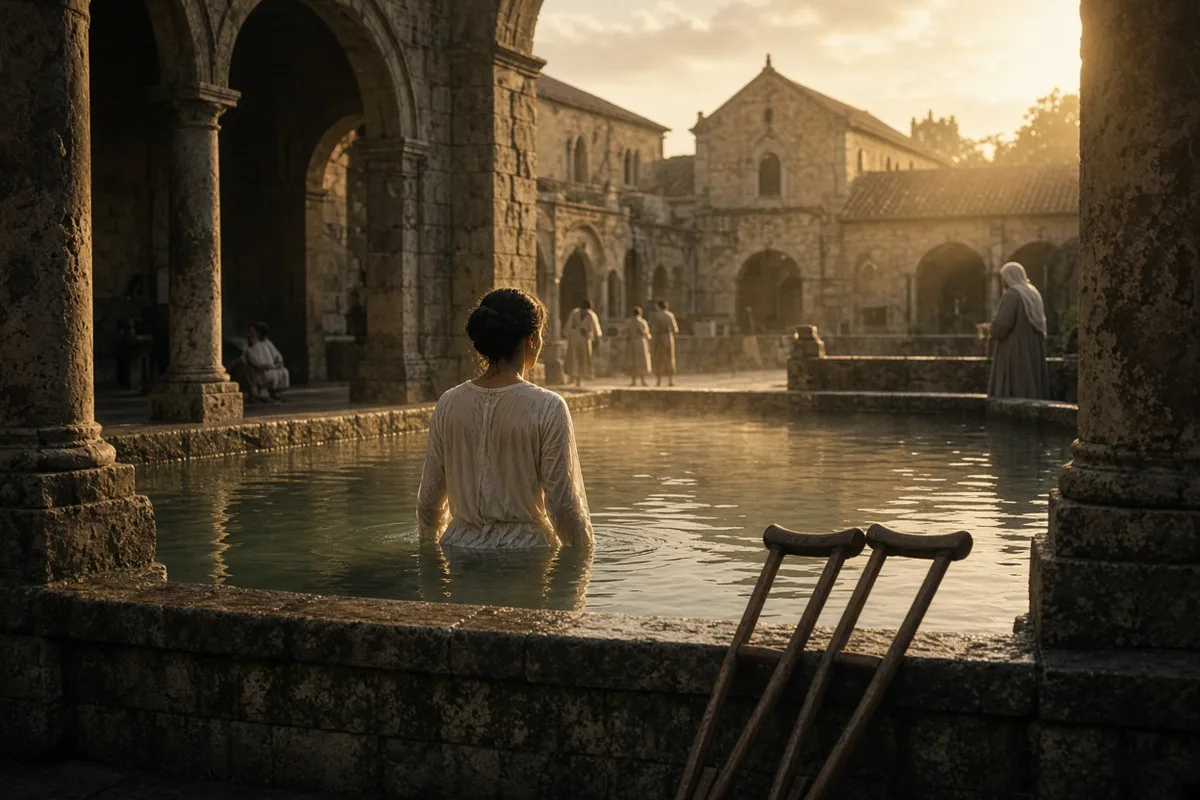
The water in the pools was cold enough to make people gasp when they entered. Marie was helped down the steps by the same attendants. She said nothing loud. Her lips moved once, then she went under. When she came up the first time her face was the same, water running from her hair. On the second dip she stayed longer. On the third she came out and stood without help.
She turned her head toward the rock face and the statue above it. Her eyes tracked the movement of a priest walking past. She named the color of his stole. The doctor who had traveled with her stepped closer and held up three fingers, then two. She answered each time. Someone in the line behind us began to cry, not loud, just the sound of breath catching.
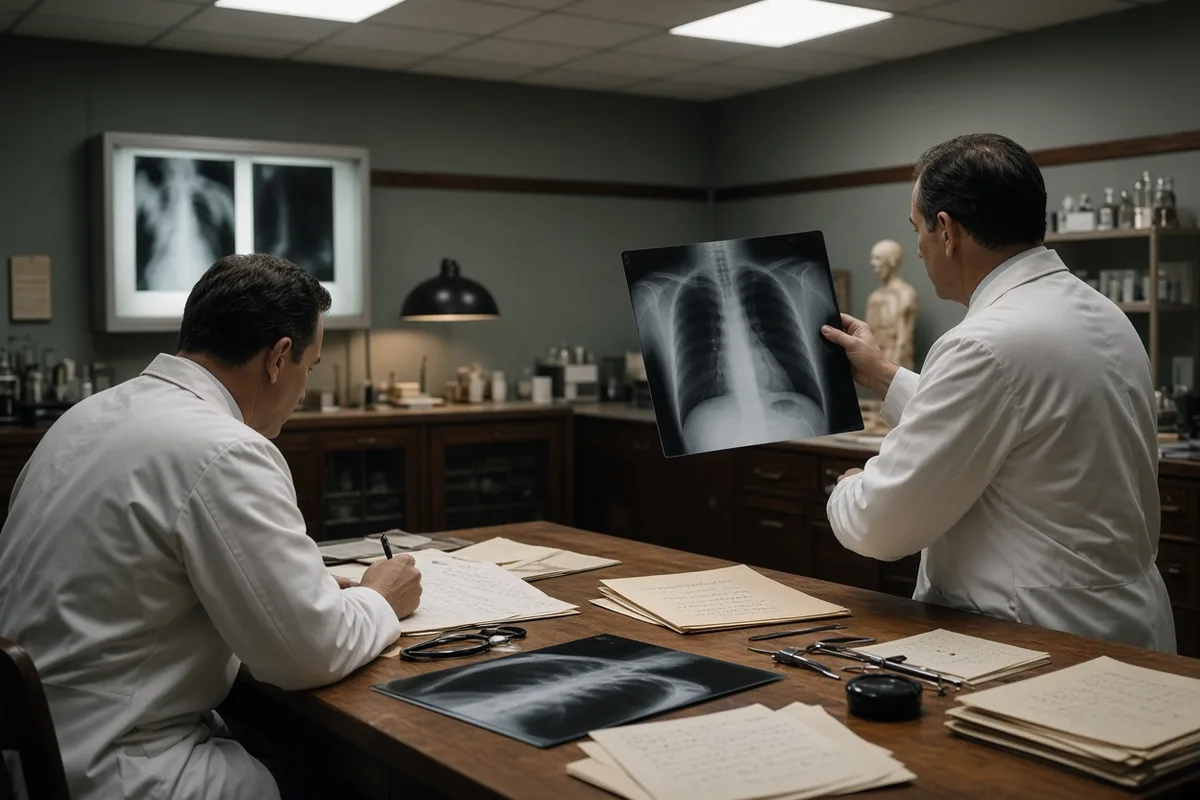
They took her straight to the medical room that afternoon. Three physicians examined the eyes with lights and lenses. The optic discs that had been pale and wasted now showed normal color and vessels. She read letters from a chart at twenty feet. The same doctor who had written “no cure” in February wrote a new note that evening. He left the notebook open on the table when he stepped outside.
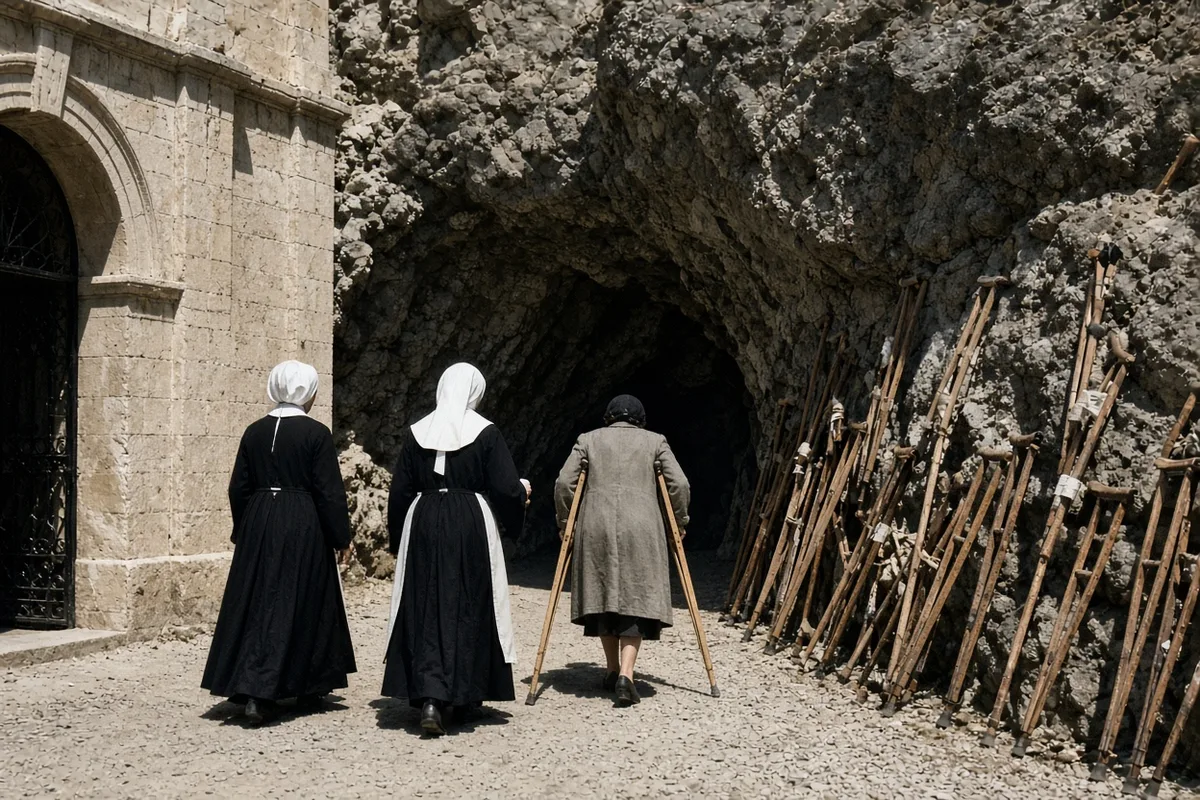
Word moved through the pilgrims by nightfall. Some came to the door of the bureau asking to see the file. Others stayed back, saying they would wait for the next examination in the morning. Marie sat with her daughter on the same bench near the carriage. She described the stars that had come out, naming them one by one as she had learned them as a girl.
The Medical Bureau kept the case open for two years. Doctors in Poitiers and Nantes reviewed the old plates and the new ones. They found no record of any treatment that could restore wasted optic tissue. The ecclesiastical commission met in 1910. On 30 July that year the cure was declared miraculous. Marie returned once more to the sanctuary, this time walking the length of the esplanade without a stick.
Her daughter married two years later and moved to a farm nearer the coast. Marie lived another twenty-six years. She never regained the use of the foot that had troubled her before the blindness, but the eyes stayed clear. Pilgrims who met her in later years asked what she had seen first when the sight returned. She always answered the same: the face of the attendant who had helped her from the water, and then the rock where the water still ran.
The file stayed at the bureau. New cases arrived each season, some healed, most not. When the commission reviewed the list again in later decades, Marie Biré’s name remained among the seventy-two that met every test they set. The carriage that had brought her in 1908 was long gone, replaced by newer ones with rubber wheels. The bench where she had sat after the pool was still there, though the paint had been redone twice.
The man who rolled the second coat across the bench slats in April 1912 was Pierre Larrieu, a day laborer from Tarbes who kept a receipt for the enamel in his pocket until the following winter. He worked beside the esplanade from seven until the bell for the eleven-o’clock procession, then walked back to the rail line carrying an empty bucket whose handle left a rust mark across his palm. That same week the Medical Bureau received a letter dated 12 April from Dr. Henri Legrand in Nantes, who wrote that he had examined Marie Biré on the twenty-ninth of March and found “the discs remain rose-colored and the fields full to 5/5 in each eye.” Legrand attached a copy of the acuity chart he had used, noting the patient read line eight without hesitation at four meters under daylight from a north window.
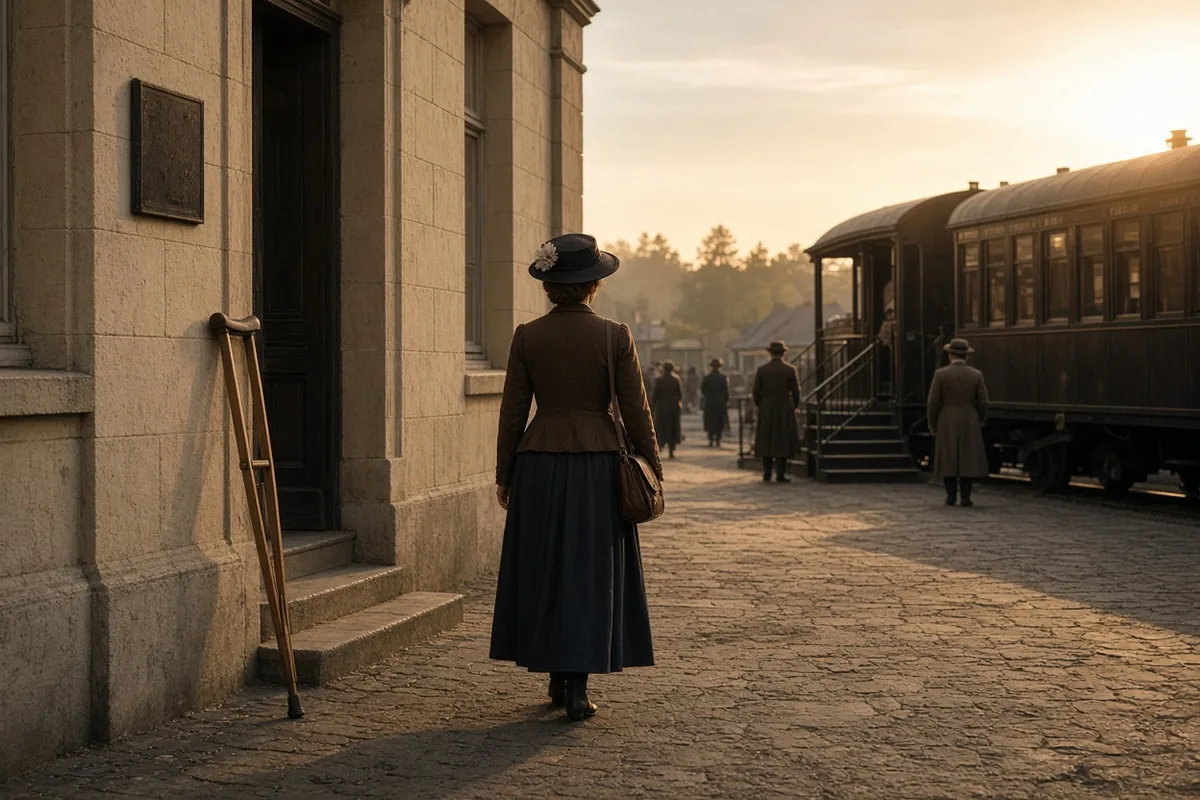
Marie returned to the sanctuary each August until 1927. On 15 August 1921 she stood in the same line of benches while the chaplain read the names of the sick from a typed list; she answered “present” when her own name was called and then walked the length of the esplanade to the statue of the crowned virgin, a distance measured later that year by the town surveyor as 187 meters. Her daughter, now Madame Louise Tranchant, kept a notebook in which she recorded the date of each visit and the exact time the train from La Roche-sur-Yon arrived at the Lourdes station. In 1924 the notebook entry for 17 August reads: “Mother saw the new electric lights on the basilica dome at nine-fifteen in the evening and said they looked like small moons.”
The Tranchant farm stood two kilometers inland from the village of La Faute-sur-Mer. On 3 February 1936 Marie suffered a stroke that left her right arm weak; the local physician, Dr. Auguste Moreau, noted in his ledger that she could still name the objects on his examining table but could no longer thread a needle. She died on 11 May 1937 at the age of seventy-one. The parish register at Saint-Michel church records the burial in plot 42, row C, and lists the six people who signed the register: Louise Tranchant, her husband Jean, their two sons, the mayor, and the same Dr. Moreau who had attended the final illness.
Louise Tranchant continued to send annual letters to the Medical Bureau until 1954. One dated 8 September 1948 states that she had taken her eldest grandson, then fourteen, to the pool and that the boy had asked whether the water still felt the same temperature as it had when his grandmother entered it in 1908. The bureau replied on 22 September with a carbon copy signed by Dr. François Leuret, who wrote that the temperature of the largest pool was measured each morning at 13 degrees Celsius and had not varied more than half a degree since the installation of the new intake pipe in 1932. Louise kept that letter folded inside the family Bible until her own death in 1963.
The file on Marie Biré was microfilmed in 1971 by a technician from the diocesan archives in Tarbes. The reel carries the number LB-1908-03 and contains thirty-four pages, including the original notes written on the evening of the cure and the later ophthalmology reports from Poitiers. In 1984 the commission added a supplementary sheet recording that no new contradictory evidence had appeared in the intervening years. The original paper file remained in the wooden cabinet in the bureau office until the building was renovated in 1997, when the cabinet was replaced by a set of steel drawers whose keys were kept by the secretary, Madame Hélène Barat.
On 22 July 2019 a great-granddaughter of Marie Biré, Claire Tranchant-Dubois, aged forty-three and employed as a librarian in La Rochelle, requested permission to view the file. She was shown the microfilm reel and the typed transcript prepared in 1971. She copied the sentence in which Dr. Legrand described the color of the optic discs and later entered that sentence into a notebook she carried for her own research on family medical history. On the same afternoon she walked to the pool, entered the water once, and remained submerged for twelve seconds by the clock on the attendant’s desk. She emerged, dried her face with a towel provided by the sanctuary, and then stood for several minutes at the rail looking at the rock face where the water still issues from the same fissure described in the 1908 report.
The last image recorded of anyone connected to the case is a photograph taken on 11 May 2022 by a volunteer at the cemetery in La Faute-sur-Mer. It shows Claire Tranchant-Dubois placing a small bunch of white roses on plot 42, row C. The roses came from a bush planted by Louise Tranchant in 1947 at the corner of the farmhouse garden; the bush still produces flowers each spring, though the stems are now supported by a wire cage erected by Claire’s husband in 2015.
The volunteer who recorded that photograph, Jean-Marc Pelletier of the parish council in La Faute-sur-Mer, logged the exposure time as 1/125 second at f/8 on a Nikon D750 with a 50 mm lens, noting in the council ledger that the light meter read 12 EV under the overcast sky at 10:42 a.m. Pelletier placed the image file in the parish archive folder labeled “Cimetière 2022-05,” where it sits beside an earlier print from 1998 showing the same plot with a different arrangement of stones. On 4 June 2022 he returned with a tape measure and recorded the rose bush at 1.4 meters in height and 0.9 meters in spread, entering both figures next to the date in the same ledger.
The farmhouse garden where the bush originated remains under the care of Claire Tranchant-Dubois’s husband, Marc Dubois, who replaced two broken fence posts on 19 March 2023 using pressure-treated pine cut to 2.4 meters each. Dubois keeps a receipt from the cooperative in La Rochelle dated that day for 18 euros and 40 centimes, and he noted on the back that the new posts were set 60 centimeters into the ground with a concrete collar. The original 1947 planting hole, still visible as a slight depression 40 centimeters from the current stem, was measured again on 2 April 2023 by Claire herself, who recorded the distance in the margin of her grandmother’s notebook.
At the Medical Bureau the steel drawers installed in 1997 now hold 2,147 active files, with Marie Biré’s microfilm reel transferred in 2018 to a climate-controlled vault whose temperature is logged daily at 18 degrees Celsius plus or minus 1 degree. The current secretary, Madame Sophie Vigne, entered the 2019 viewing request into the digital register on 23 July 2019 at 14:17, noting the reel was returned to slot 47-B at 16:03 after Claire Tranchant-Dubois had finished. Vigne also recorded that the north window used by Dr. Legrand in 1912 was reglazed on 11 September 1994 with 4 mm float glass, a change documented in the bureau maintenance log kept by the sanctuary works department.
The esplanade itself was resurfaced between 12 and 28 October 2016 with 1,850 square meters of Portuguese granite laid in 40 by 40 centimeter slabs 3 centimeters thick. The town surveyor’s report dated 3 November 2016 states the new surface maintains a 1.2 percent slope toward the existing drains, and the distance from the bureau door to the statue base remains 187.4 meters after the work. On 14 August 2023 the 11 o’clock procession passed over those slabs at 11:04, led by Canon Pierre-Henri Duval, whose voice was amplified through two loudspeakers mounted on poles erected in 2009.
The pool intake pipe installed in 1932 was inspected on 7 January 2024 by the sanctuary hydraulic engineer, Philippe Renaud, who measured the flow rate at 42 liters per minute and the temperature at 12.8 degrees Celsius at 8:15 a.m. Renaud’s report, filed under reference HYD-2024-01, notes that the original spring fissure was photographed again on that date with a GoPro camera lowered on a 3 meter pole; the fissure opening measured 11 centimeters across at its widest point. The attendant on duty that morning, Madame Élisabeth Caron, signed the report confirming the temperature reading matched the 13 degrees recorded in 1948.
Claire Tranchant-Dubois returned to the sanctuary on 9 August 2023 with her two children, aged 11 and 9, and signed the visitor register at the bureau at 10:22 a.m. She requested the same reel LB-1908-03, which was produced from the vault at 10:41 and returned at 11:09 after she photographed the Legrand sentence with her phone set to 300 dpi. Later that afternoon she entered the largest pool at 14:55, remained submerged for 11 seconds according to the attendant’s digital timer, and exited at the same steps used in 1908. The children each placed one hand on the rock face for 4 seconds before the family walked the 187.4 meters back to the esplanade entrance.
The parish register at Saint-Michel church received an additional annotation on 12 May 2024 when the mayor of La Faute-sur-Mer, Monsieur Alain Bresson, signed a request to reserve an adjacent plot for future family use; the reservation number 2024-07 was entered in the margin beside plot 42, row C. Bresson’s signature appears directly below the 1937 entries, and the ink used was a standard blue ballpoint purchased from the town hall stationery supply on 3 January 2024. On the same day the cemetery groundskeeper, René Fouquet, pruned the rose bush to a height of 1.25 meters and applied 2 kilograms of organic mulch around its base, recording both actions in the maintenance notebook kept in the tool shed beside the church.