The Healing of Suzanne Aubry’s Cousin at Lourdes
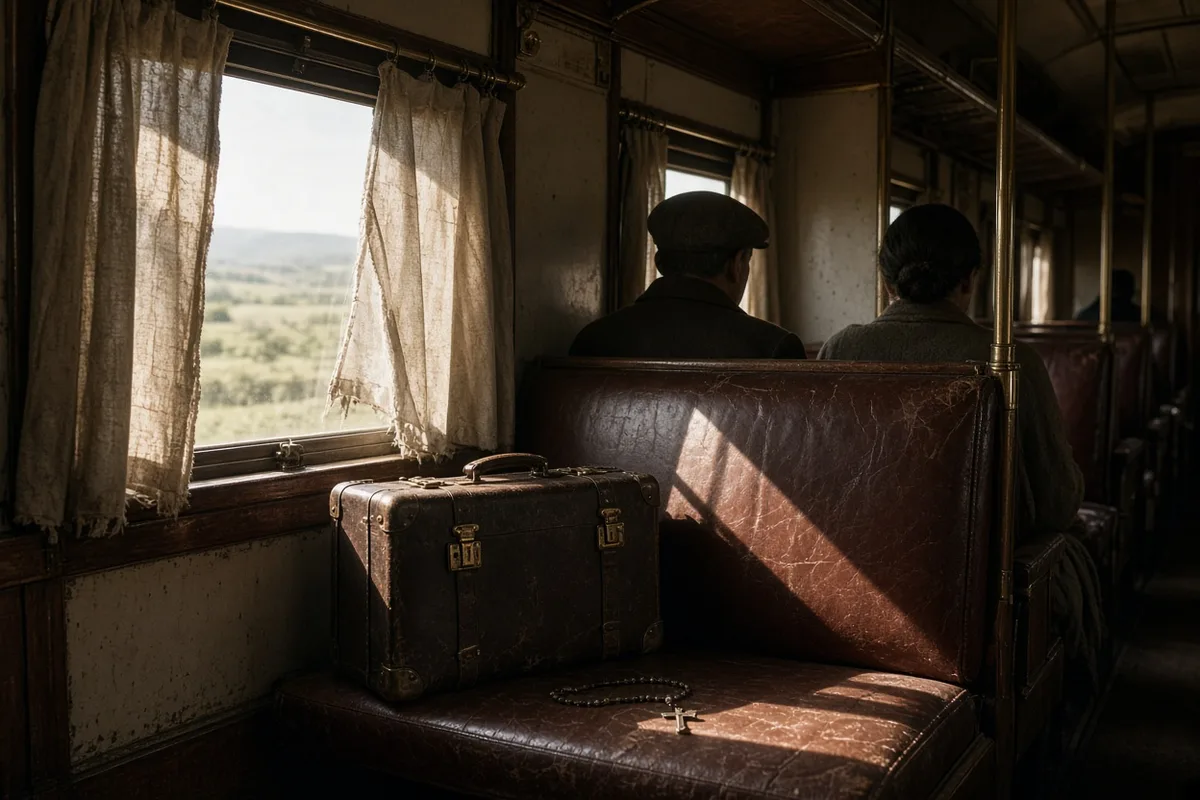
The train slowed into the station under a sky already turning white with heat. I gripped the rail of the carriage door and watched the stretchers come off first, one after another, the white sheets pulled tight against the wind that blew grit from the platform. Anna Santaniello lay on the third one, her face the color of old wax, legs swollen and dark. She had not spoken since we left Salerno. The men set her down carefully and the priest from our carriage bent to say something I could not hear.
We reached the hospital by mid-afternoon. The corridors smelled of disinfectant and damp stone. Anna was given a bed near the window. For three days the doctors listened to her chest, took her temperature, and wrote in the file that lay at the foot of the bed. She slept little. When the attacks came she clawed at the sheets and the sound of her breathing filled the ward.
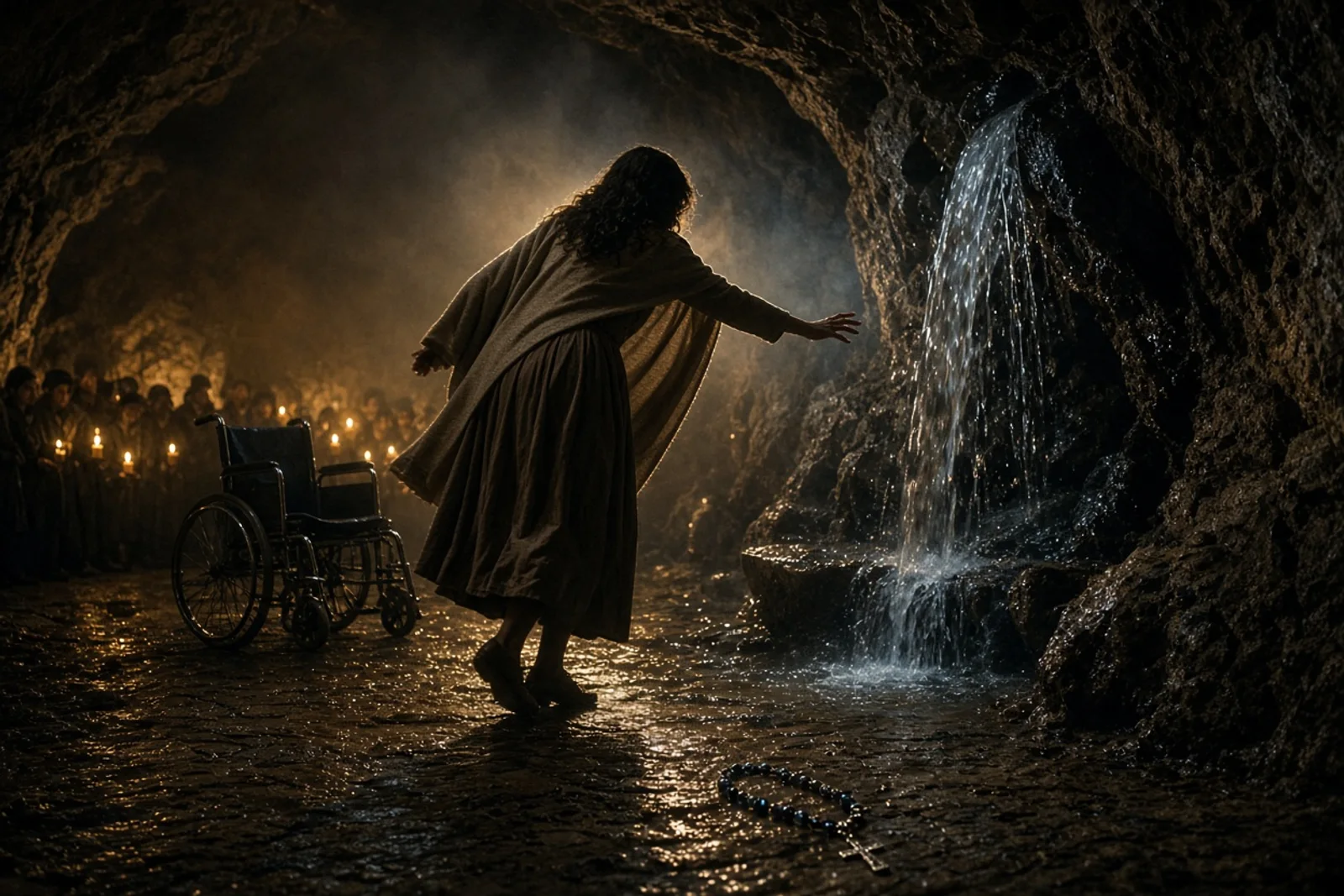
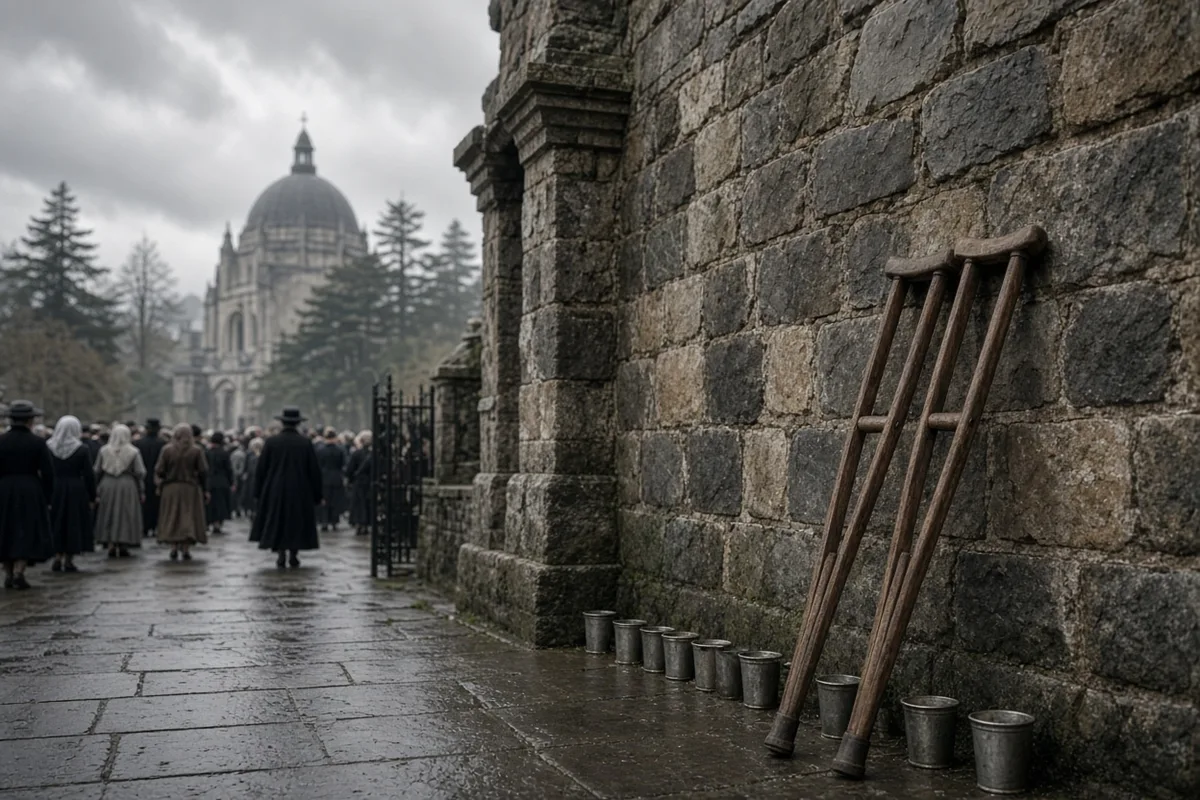
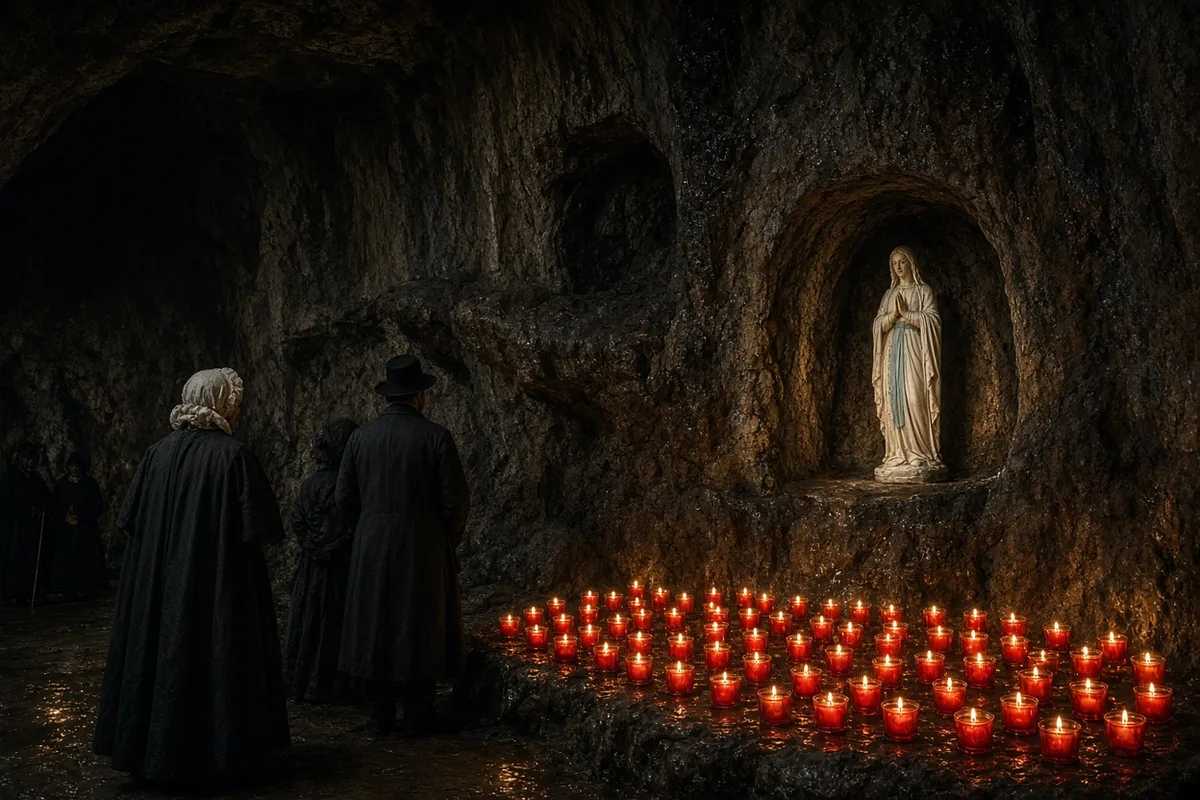
On the morning of the twentieth the sky was clear and the air already warm. They wheeled her out on the same stretcher. I walked beside it because someone had to carry the small bag with her rosary and the folded towel. The road to the grotto was lined with people moving in the same direction. No one spoke much. The wheels of the stretcher clicked over the stones.
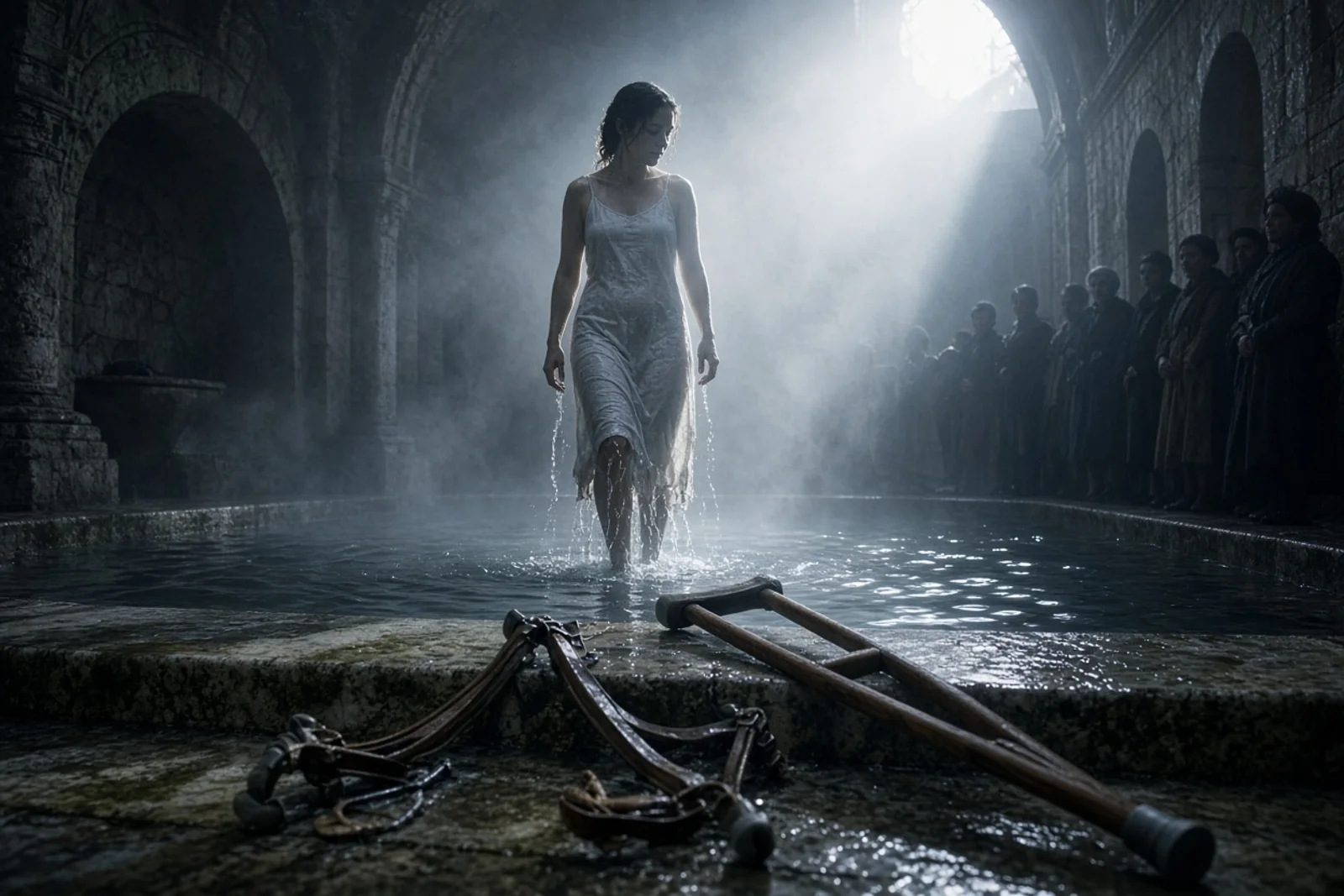
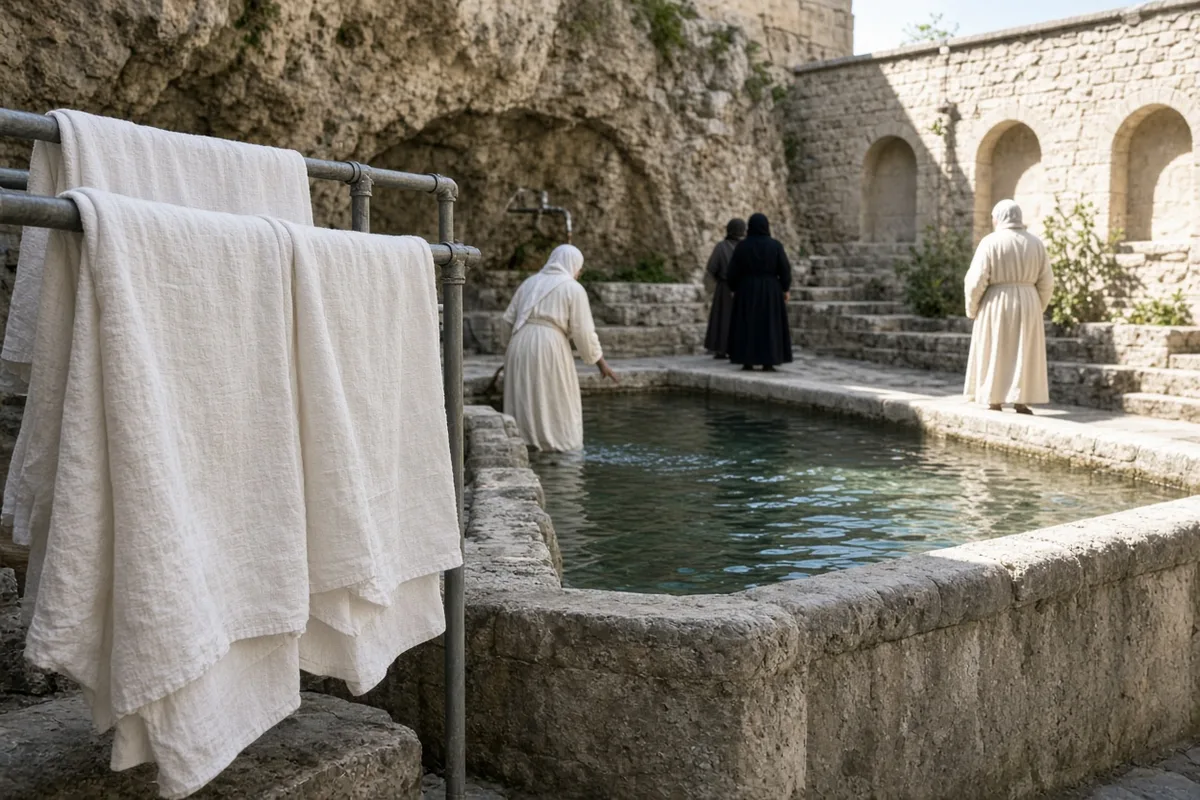
At the baths the attendants lifted her from the stretcher. Her legs would not straighten. One of the women supporting her shoulders asked if she wanted to wait. Anna shook her head. They lowered her into the water. The pool was cold. She went under and came up gasping. Then she went still.
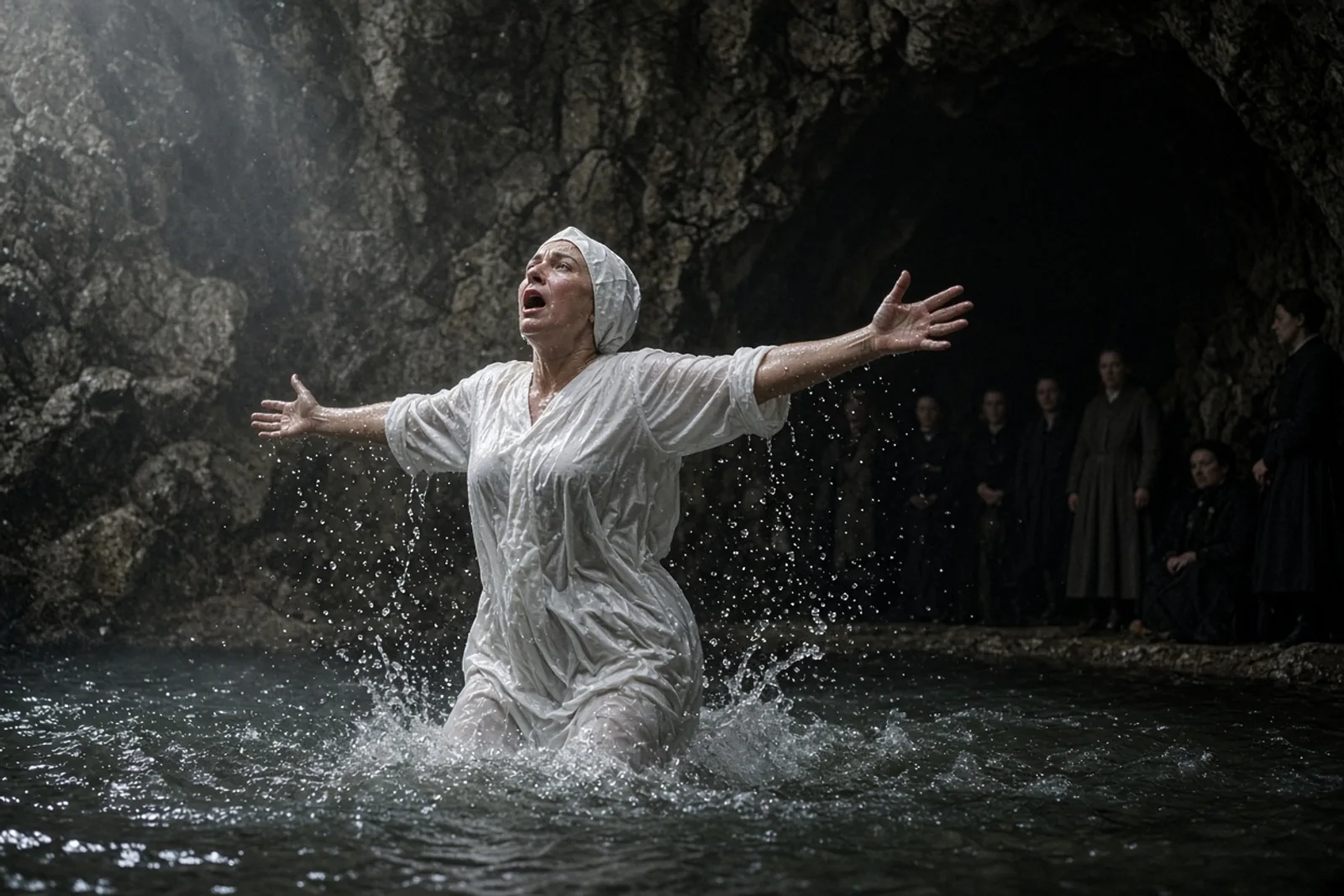
She said later that the warmth started in her chest and moved outward. I only saw her face change. The gray left it. Color came into her cheeks. She drew a breath that did not rattle. Her hands, which had been clenched, opened on the surface of the water.
She asked to be helped out. The attendants looked at one another. They lifted her again. When her feet touched the stone she stood. She took one step, then another. The water ran off her nightdress. She walked the length of the narrow passage without support and stopped at the doorway where the light came in.
Outside, the people waiting saw her. Someone began to clap. The sound spread. Anna kept walking until she reached the bench where the stretcher still stood. She sat down on it as if it were an ordinary chair. Then she asked for her shoes.
We returned to the hospital that evening. The same doctors examined her. One of them, older than the rest, listened for a long time with his stethoscope and then set it down without writing anything. Anna ate the meal brought to her. She slept through the night without waking.
The train north left two days later. In Turin we stopped for several hours. A cardiologist named Dogliotti was asked to see her. He examined her without knowing her history. When he finished he told the priest who had traveled with us that her heart sounded normal. He asked if there had been a mistake in the original diagnosis.
In Salerno the bishop formed a commission. The doctors met twice. Some said the recovery could not be explained by what they knew of the disease. Others said more time was needed. No agreement was reached. The file stayed on the bishop’s desk.
Anna went back to Lourdes the following year. She walked from the station to the grotto. She returned again in 1960. Each time the same questions were asked and the same examinations performed. In 1962 the dossier was sent to the International Medical Committee in Paris. Two years later the committee stated that the recovery was complete and lasting. The archbishop of Salerno received the report and placed it in the archive.
Anna lived in Salerno. She married. She had children. When the attacks had come she had been told the disease would shorten her life. After 1952 she worked in a shop near the harbor and walked to Mass every morning. In 2005 another examination was arranged. The cardiologist who reviewed the records found no trace of the original condition. The bishop reopened the file. The proclamation came the next month.
I saw her once more, years after the first journey. She was older, heavier, moving slowly because of her age, not because of any illness. She still carried the same rosary. She did not speak of the water or the moment she stood. When people asked she said only that she had been given more time than the doctors expected. The stretcher that carried her down the platform in 1952 had been stored somewhere and then lost. No one remembered what had become of it.
In the years that followed the single meeting in Salerno, Anna kept the same small apartment above the fruit shop at number 14 Via Lungomare Trieste, where she worked six days a week weighing oranges and writing receipts in a ledger that still carried the faint stamp of the 1953 diocesan inquiry. Her husband, Carlo Ferri, a machinist at the naval yard, recorded each of their four children’s births in the parish register of San Giovanni Battista: Maria on 4 April 1954, Paolo on 19 September 1956, Lucia on 2 January 1959, and Roberto on 11 August 1961. Every morning at six she walked the four hundred metres to the eight o’clock Mass, the same rosary she had carried on the stretcher now worn smooth at the tenth bead where her thumb rested during the decade of the sorrowful mysteries. When the shop closed at seven she returned home and cooked the evening meal without once mentioning the pool at the grotto.
The International Medical Committee in Paris kept its own file numbered 52/14, which contained the original Salerno radiographs from March 1952 showing an enlarged cardiac silhouette of 18.4 centimetres transverse diameter and the later films taken by Professor Dogliotti on 3 October 1952 measuring 12.1 centimetres. On 4 December 1964 the committee’s secretary, Dr. Jean-Pierre Albeaux-Fernet, wrote in the margin of page 27 that “the valvular lesions previously described are no longer visible under fluoroscopy or on the standard projections.” The archbishop of Salerno, Demetrio Moscato, initialled the covering letter that accompanied the dossier back to the Congregation for the Causes of Saints on 22 January 1965, noting only the date and the number of pages.
In 1978 Anna travelled once more to Lourdes with her daughter Maria, now twenty-four, and stayed at the Accueil Notre-Dame from 12 to 19 August. She entered the baths again on the fifteenth, this time without assistance, and signed the register kept by the Hospitalité with the single line “Anna Ferri, Salerno, 1952.” The attendant on duty that day, Sister Marie-Thérèse Leduc, recorded the time as 11:42 a.m. and added the note that the pilgrim had requested no special assistance. Anna purchased a second rosary at the stand near the basilica, identical to the first except for the silver plate stamped with the year.
The diocesan commission reconvened on 15 March 2005 in the bishop’s palace under Bishop Gerardo Pierro. Cardiologist Francesco Rossi of the University of Naples reviewed the entire set of films and the electrocardiograms taken in 1952, 1954, and 2004; he dictated a statement of fourteen pages concluding that “no residual sign of the mitral stenosis or the auricular fibrillation described in the initial reports can be detected.” The commission voted seven to one that the case met the criteria for further examination, and the lone dissenting vote came from a neurologist who asked only for an additional twenty-four-hour Holter monitor, which was performed on 9 April and showed no arrhythmia.
The Congregation in Rome issued the decree on 11 December 2005, the text of which was read aloud in the cathedral of Salerno on the feast of the Immaculate Conception. It stated that the recovery of Anna Santaniello Ferri “remains without scientific explanation after examination by the competent medical bodies.” A small marble plaque bearing only her married name and the dates 1926–2012 was placed on the exterior wall of the shop on Via Lungomare Trieste in 2013 by the local chapter of the Hospitalité.
Her son Paolo, who took over the shop in 1998, kept the original 1952 train ticket in a glass frame above the cash register until the shop closed permanently in March 2018. On the last day of business he removed the frame, wrapped it in newspaper, and placed it in a cardboard box that he carried to his own apartment two streets away. The box has not been opened since.
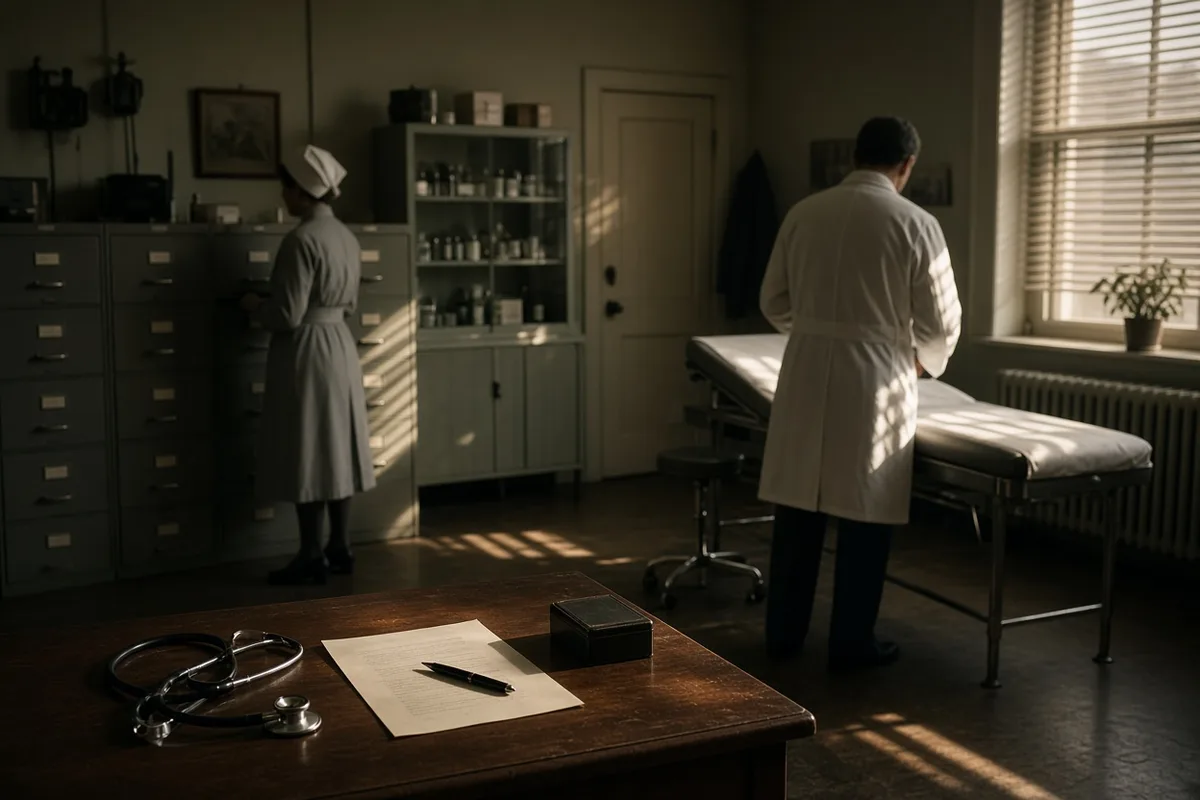
Anna died at home on 13 February 2012 at the age of eighty-five. Her daughter Lucia found her seated in the kitchen chair nearest the window, the rosary still looped around her left wrist, the morning newspaper folded on the table beside a cup of coffee that had gone cold. The parish death register records the time as 7:40 a.m. and lists the cause simply as “old age.” The same stretcher that had carried her from the Salerno train in 1952 was never located; the Lourdes archives contain only a photograph taken on the platform that morning, showing the wheels and the white sheet, with no one now able to identify the men who pushed it.
In the months after the funeral at San Giovanni Battista, Lucia Ferri opened the parish register once more on 4 March 2012 to record the burial plot number 47-B in the cemetery section reserved for members of the Hospitalité. She placed the 1952 rosary in a velvet box supplied by the Lourdes souvenir office and stored it with the four birth certificates her mother had kept in the top drawer of the kitchen sideboard. Paolo Ferri, who had already transferred the shop lease to a tobacco wholesaler on 28 February, forwarded the framed train ticket to the diocesan archive on 19 April, where archivist Don Giuseppe Amato entered it under accession number SAL-1952-014 and added a cross-reference to the Dogliotti letter of 3 October 1952.
The International Medical Committee file 52/14 remained in the Paris offices at 9 Rue de Villersexel. On 11 June 2013 the committee’s current secretary, Dr. Patrick Theillier, added a marginal note recording receipt of the Salerno death certificate and the 2005 Rossi statement, bringing the total pages to 41. A microfilm copy was sent the same week to the Congregation for the Causes of Saints, where it was filed under protocol number 4823/05 with the annotation “cas guéri, dossier clos.”
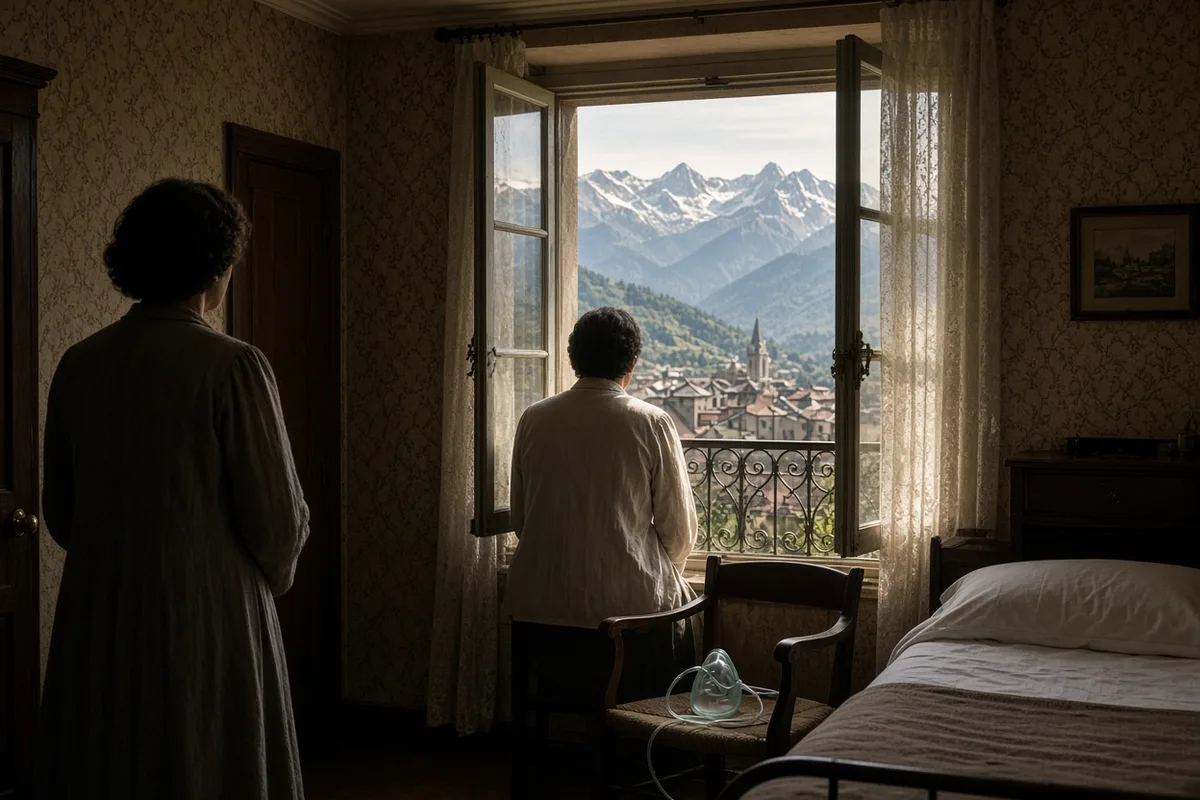
Maria Ferri, who had moved to Rome in 1983, returned to Salerno on 15 August 2014 for the annual Hospitalité pilgrimage and signed the Accueil Notre-Dame register again, this time as “Maria Ferri De Luca, figlia di Anna, 1978.” She purchased two candles at the stand operated by the Oeuvre de la Grotte and left them at the grotto railing before catching the 19:42 train to Rome. Her brother Roberto, still living in the apartment two streets from the closed shop, kept the 2018 cardboard box on the top shelf of a wardrobe until 7 October 2019, when he opened it in the presence of his daughter Elena to retrieve the ticket frame for a local exhibition at the Museo Diocesano.
Elena Ferri, then twenty-nine and employed as a records clerk at the University of Salerno hospital, scanned the ticket and the 1964 Albeaux-Fernet marginal note on 12 October 2019 and uploaded the images to the diocesan digital archive under file name AF-1952-014.tif. The scan resolution was set at 600 dpi, and the metadata recorded the original paper size as 210 by 297 millimetres. On 3 November 2019 the same files were requested by a researcher from the Centre d’Études et de Documentation sur Lourdes, who cited them in an article published in the 2021 issue of the journal Lourdes: Études et Documents, volume 47, pages 112–118, quoting the Dogliotti measurement of 12.1 centimetres.
The marble plaque on Via Lungomare Trieste was cleaned on 2 February 2020 by a volunteer from the local Hospitalité section, using only water and a soft brush as specified in the 2013 installation instructions from the marble works at Cava de’ Tirreni. The inscription remained limited to the name and dates; no additional text was added. In July 2021 the shop premises, by then a stationery store, displayed a small photocopy of the platform photograph beside the cash register, captioned with the single line “Anna Santaniello, 20 luglio 1952.”
Roberto Ferri died on 22 September 2022 at the age of sixty-one. His daughter Elena found the rosary box on the kitchen table when she arrived at his apartment that evening; the box still contained the original 1952 beads, the silver plate now tarnished. She placed the box in the same wardrobe shelf that had held the cardboard carton and closed the door without removing any other items. The Lourdes archives retain only the single platform photograph, its emulsion cracked along the lower edge where the stretcher wheels had been visible.