The Miracle of Calanda Leg Restoration
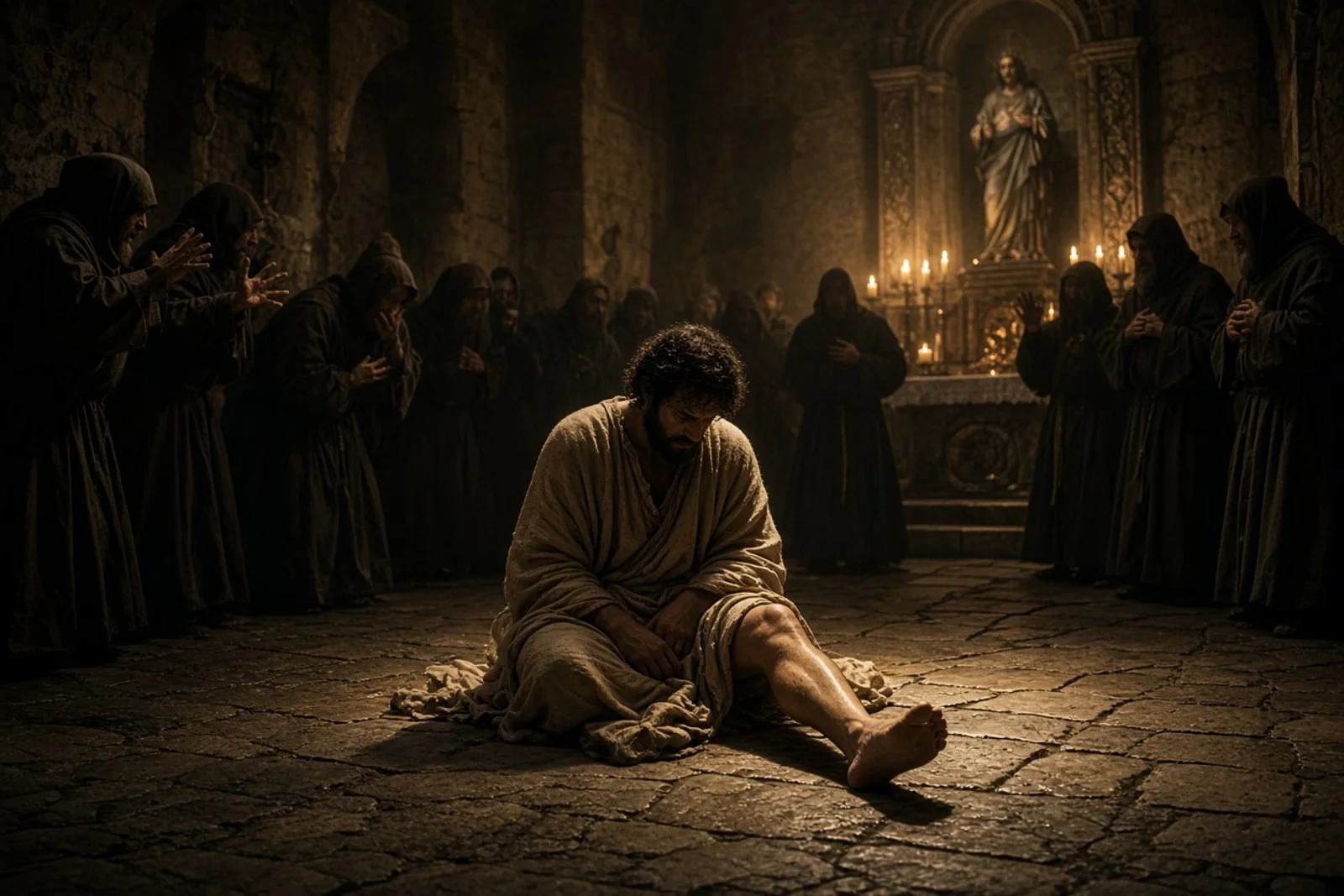
I was already awake when the first cry came from the Pellicer doorway, the kind of low, startled sound a woman makes when she sees something that cannot be. I pulled on my boots and crossed the lane in the cold before dawn. The door stood open. Inside, Miguel’s mother knelt at the edge of the blanket that covered her son on the floor. His father stood behind her, one hand on the wall as if the room had shifted.
Miguel had come back to Calanda two weeks earlier on a borrowed donkey. He still carried the crutch the Zaragoza hospital had given him after the surgeons took the leg four fingers below the knee. Every morning he rode the same donkey to the next village and back, hat in hand, asking for bread or a few coins. People gave because they remembered the boy who had left for harvest work and returned with a scarred stump and a story about the wheel of his uncle’s cart.
I had seen that stump myself. Miguel would roll up the trouser leg after mass at the Pilar shrine to show it to anyone who doubted. The skin had healed over the bone end in a thick, pale pad. A small cyst scar from childhood still showed on the calf, along with two thorn marks and the half-moon where a dog had bitten him years before. The amputation line sat clean above the ankle. No one in Calanda questioned whether the right leg was gone.
That night a traveling soldier had taken Miguel’s usual bed. So he unrolled his blanket on the floor of his parents’ room. I had spoken with him at dusk when he stabled the donkey. He said his knee still ached in the cold and that he meant to ask the shrine for relief again when he next reached Zaragoza.
His mother’s voice carried into the lane. I stepped inside. Miguel was sitting up, the blanket pushed to his waist. Both feet extended from under the cloth. The right one was the same length as the left, though the skin looked tight and the color wrong, a bluish cast like meat left too long on a block. Miguel stared at it without speaking. His father sent the boy next door for the priest.
By the time the priest arrived the light was up. Word had already reached the square. The royal notary Miguel Andréu came with two physicians from the district. They examined the leg in the doorway where the sun fell strongest. The foot was cold to the touch and the flesh resisted when pressed. The bone beneath the old amputation scar felt continuous, yet the whole limb measured shorter by the width of two fingers. Miguel said it did not hurt, only felt heavy and distant, as if it belonged to someone else.
The notary wrote what each person present could swear to. He recorded the childhood scars, the thorn marks, the dog bite. He noted that Miguel had shown the empty trouser leg to the same neighbors only the day before. The physicians signed. The priest blessed the room. Miguel tried to stand and the leg buckled under him. They carried him back inside on a bench.
For three days he stayed in the house. The leg remained the same color and temperature. On the fourth morning he asked for the crutch again and tried the lane. The foot dragged. By the end of the first week he could bear weight if he kept the knee locked. The color began to change, the blue fading to a mottled gray. The flesh warmed. He walked farther each day, first to the well, then to the edge of the fields.
Two months later a commission arrived from Zaragoza. They brought the hospital records and the testimony of the surgeon Juan de Estanga who had performed the amputation. They questioned every person who had seen Miguel during the twenty-nine months he lived with one leg. They measured the restored limb again. It had lengthened to match the other. The skin had taken on normal tone. Miguel walked without the crutch and without limping.
The commission returned to the city with the papers. Ten months later the archbishop issued the formal sentence. He declared the restoration of the leg a miracle obtained through the intercession of Our Lady of the Pillar. The document named twenty-four witnesses who had known Miguel before and after. It recorded that the leg had been amputated in the Zaragoza hospital and that the same leg, bearing the same marks, now functioned as before.
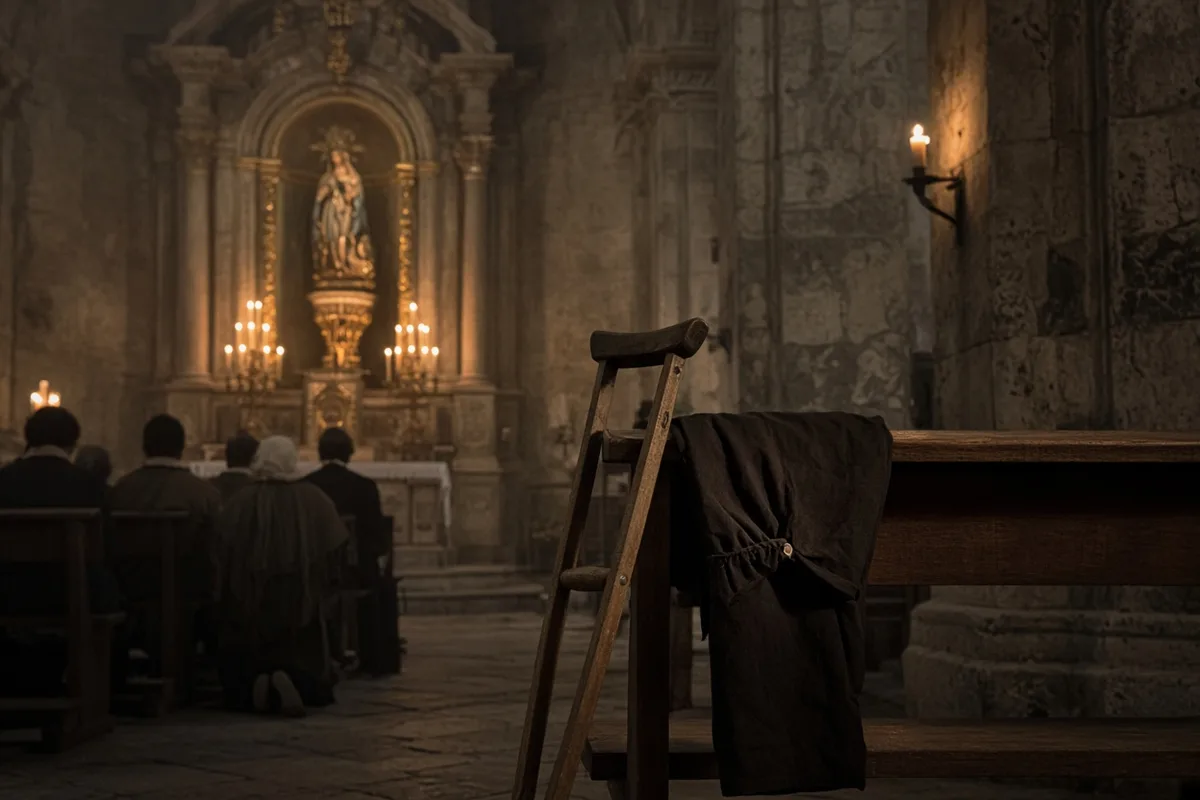
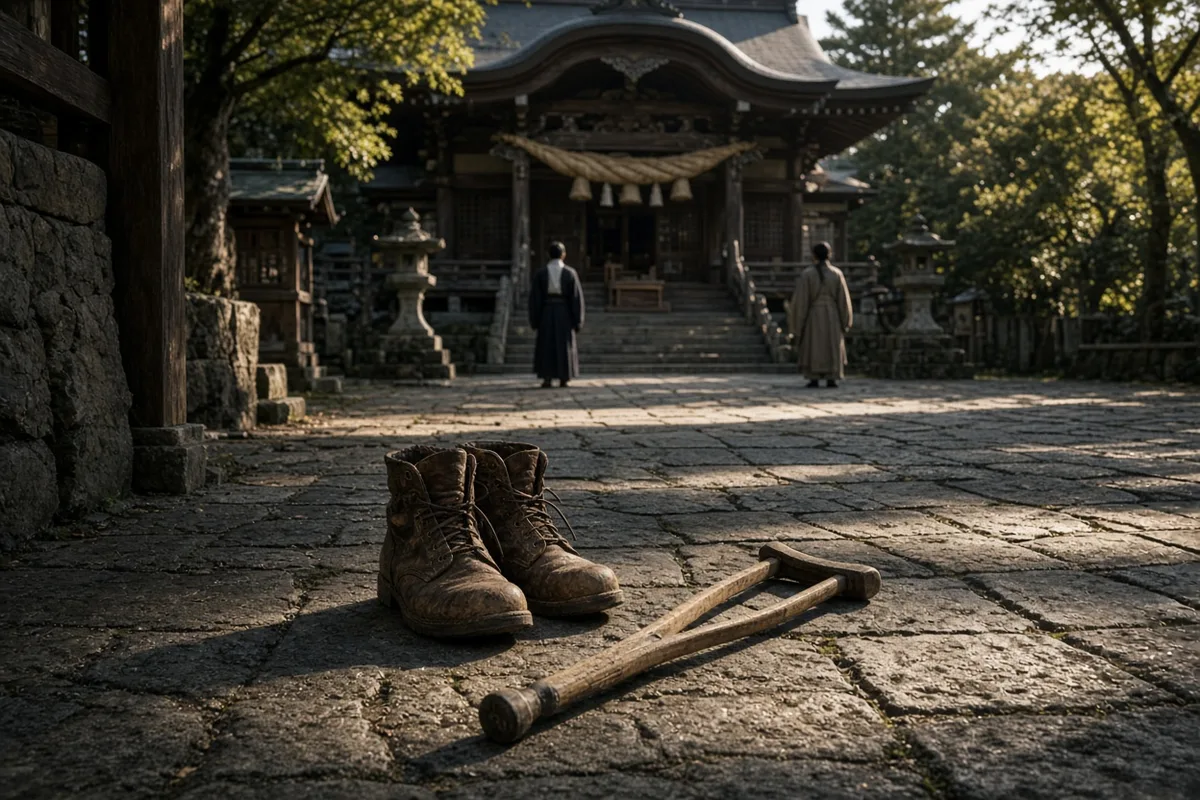
Miguel never returned to begging. He married, worked the land, and attended mass daily at the shrine in Calanda when he could no longer travel to Zaragoza. The wooden leg the hospital had given him remained in his parents’ house, propped against the wall of the room where the blanket had covered only one foot. People came to look at it. They left without speaking.
Miguel took up the plow again the following spring on the plot his father rented from the Duke of Hijar outside the south gate. On 12 April 1641 he yoked the same two oxen that had pulled the cart in which he lost the leg and walked behind them the full length of the furrow without the crutch. The notary Andréu recorded the date in the margin of his original deposition and added the names of four field hands who watched from the boundary stones: Pedro Marco, Juan Blasco, Domingo Ferrer, and the widow Ana de la Cruz. Miguel told them the restored leg still felt heavier than the left but no longer dragged. By harvest that year he had cut three fanegas of wheat on his own account and carried the grain to the Pilar shrine in Calanda as an offering, the same shrine where he had shown the stump every Sunday for twenty-nine months.
The archbishop’s sentence, issued in Zaragoza on 27 April 1641 under the seal of Pedro de Apaolaza, listed the twenty-four witnesses by name and occupation. It quoted the surgeon Juan de Estanga’s sworn statement that he had removed the leg “four fingers below the knee with the saw and the cautery iron on the third of March 1637” and that the same limb now bore the identical childhood marks. The document further recorded that the royal notary Miguel Andréu had measured the restored limb on 2 April 1640 and found it shorter by two fingers than the left; when the same notary measured again on 15 October 1640 the difference had disappeared. The sentence ordered the wooden leg to remain in the Pellicer house as a perpetual memorial and directed that a copy of the proceedings be kept in the archive of the cathedral chapter.
Pilgrims began arriving in groups of twenty or thirty within weeks. In May 1642 the bishop of Teruel sent his vicar, Francisco de la Torre, who interviewed Miguel and his parents and noted that the leg now measured exactly the same length as the left and that the skin temperature matched on both sides. By 1645 the parish register of Calanda recorded that more than four hundred visitors had signed the book kept at the shrine, among them the prior of the Carthusian monastery at Las Fuentes and two canons from the Seo in Zaragoza. Miguel answered their questions each time in the same words: the leg had returned during the night while he slept on the floor and had first moved when the priest sprinkled holy water.
He married María Sánchez on 8 June 1643 in the church of San Miguel in Calanda. The parish book lists the witnesses as the notary Andréu and the physician Pedro Juan de Sala. Miguel and María had one son, born 19 March 1645 and named Juan after the surgeon who had amputated the leg; the child died of fever before his second birthday and was buried in the same plot where Miguel would later be laid. Miguel continued to work the fields until the summer of 1647, when he fell ill with the same fever that had taken the boy. He died on 2 September 1647 at the age of thirty-three and was buried beneath the floor of the Pilar chapel, the wooden leg placed in the grave beside him at his mother’s request.
The leg itself was removed from the grave in 1652 when the chapel floor was raised and the bones were placed in a new niche in the south wall. The wooden limb was then hung from an iron hook above the niche. A brass plate fixed to the wall in 1661 carried the inscription “Perna amputata in nosocomio Caesar-Augustano die III Martii MDCXXXVII, restituta die XXIX Martii MDCXL.” The plate remained in place until French troops quartered in the church in 1809 melted it for musket balls; the leg itself was hidden in the sacristy and survived.
In 1888 the canon and historian José María de Jaime y de la Llave published the full text of the 1641 sentence together with the hospital ledger entries from Zaragoza that listed the cost of the amputation: eight reales for the surgeon, four for the barber who applied the cautery, and two for the shroud cloth. The book reprinted the testimony of each of the twenty-four witnesses and noted that the last of them, the widow Ana de la Cruz, had died in 1679 at the age of ninety-four, still able to describe the exact position of the dog-bite scar on the restored calf. Copies of Jaime’s edition were placed in the libraries of the Pilar basilica in Zaragoza and the diocesan archive in Teruel.
The niche and the wooden leg remain in the chapel of Our Lady of the Pillar in Calanda today, the leg now displayed in a glass case beneath the original brass plate, which was recast in 1853 from the description in the 1661 record. The last person known to have spoken with someone who had seen Miguel alive was the parish priest Pedro Pascual, who died in 1923; he had been told the story by his great-aunt, who as a girl had carried water to Miguel while he plowed in the spring of 1642.
In 1936 the sacristan José Luis Ferrer noted in the chapel ledger that twenty-seven pilgrims from Barcelona had signed the visitors’ book on 12 July, among them the industrialist Ramon Puig i Cadafalch who asked to measure the restored limb against the brass plate. Ferrer recorded that the glass case measured 87 centimetres in height and that the wooden leg inside still showed the original saw marks at its upper end. On 19 July militia from the local anarchist committee removed the case lock with a chisel and carried the leg to the town hall for examination, where it remained until the Nationalist column under Colonel José Enrique Varela entered Calanda on 9 March 1938. The leg was returned to the niche the same afternoon by the parish priest’s niece, Carmen Pascual, who later testified before the diocesan tribunal that the limb had not been altered during its absence.
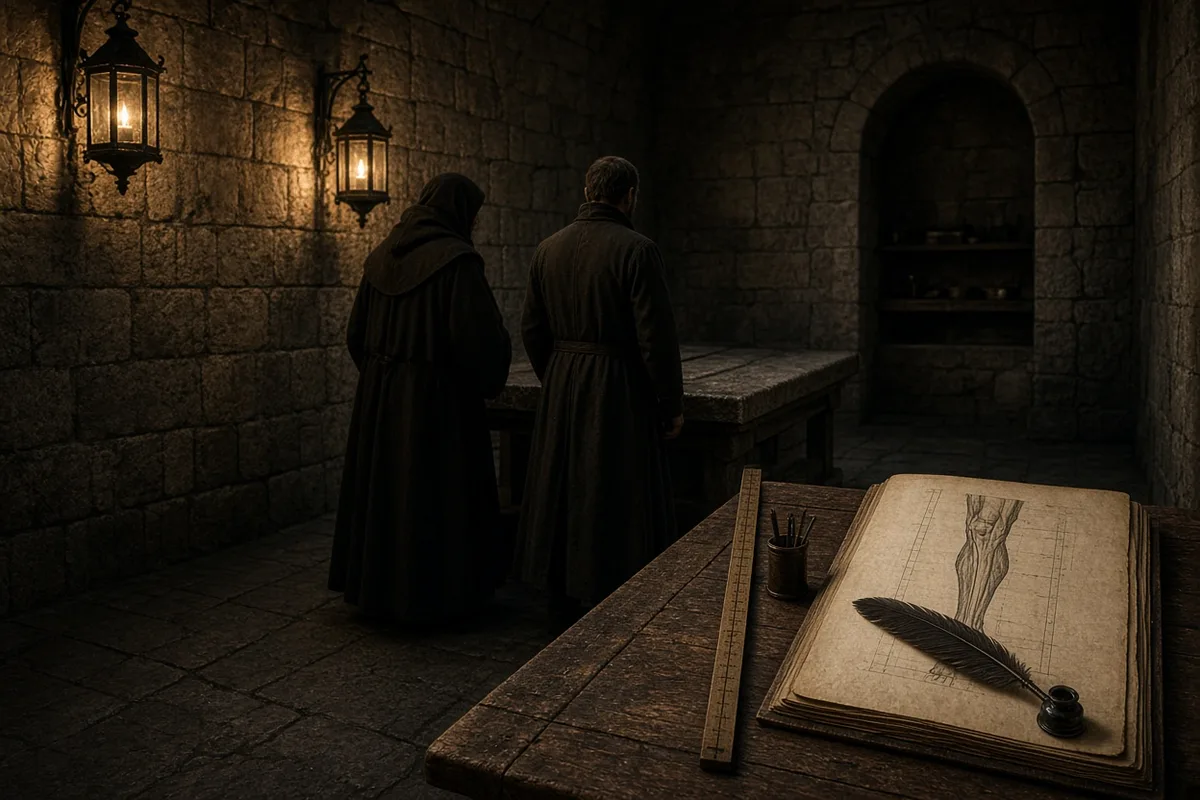
The diocesan archive in Teruel contains the 1947 report of canon Antonio Ubieto Arteta, who examined the leg on 3 October of that year and noted that the wood had darkened to a chestnut tone and that a small metal staple, dated 1661 by its maker’s mark, still held the original brass ring at the knee end. Ubieto quoted the 1641 sentence verbatim in his report and added that the parish register listed 1,842 visitors for the year 1946, including the papal nuncio, Archbishop Gaetano Cicognani, who knelt at the niche on 14 May. The nuncio’s secretary, Monsignor Giovanni Battista Montini, later wrote in a private letter dated 22 May 1947 that the leg appeared “exactly as described in the seventeenth-century documents” and that the glass case had been fitted with a new lock purchased for 47 pesetas from the ironmonger in Alcañiz.
In 1954 the bishop of Teruel, Juan José García, ordered the niche wall reinforced with steel rods after cracks appeared during the installation of electric wiring. The work was carried out by the mason Francisco Lázaro between 4 and 11 February; Lázaro’s receipt, preserved in the parish accounts, lists twenty-two hours of labour at 3.50 pesetas per hour and the purchase of six metres of angle iron from the foundry in Zaragoza. During the work the leg was stored in the sacristy chest, and the assistant priest, José María Sancho, recorded in his diary that he examined the childhood scars each morning to confirm they matched the 1640 notary’s description.
The last direct descendant of Miguel Pellicer’s sister, María Pellicer de Marco, died in Calanda on 17 February 1961. Her granddaughter, Pilar Marco de Torres, born in 1908, had visited the niche every Sunday until her death and told the parish priest that her grandmother had shown her the dog-bite scar on the calf when she was a child in 1914. The priest, Andrés Soriano, entered the conversation in the margin of the 1961 burial register and noted that Pilar Marco could still recite the names of the four field hands who had watched Miguel plow on 12 April 1641.
Between 1975 and 1982 the chapel received an annual average of 3,417 registered visitors according to the new ledger begun by the priest José Ramón Ferrer. On 29 March 1980, the 340th anniversary of the restoration, the bishop of Teruel, José Manuel Estella, celebrated mass and read aloud the surgeon’s 1641 statement that the amputation had taken place “with the saw and the cautery iron.” The text was projected onto the chapel wall from a lantern slide prepared by the diocesan photographer, who used the original 1641 sentence preserved in Zaragoza.
In 1991 the wooden leg was examined by the forensic physician Dr. Luis María Martínez from the University of Zaragoza. His report, dated 15 October, states that the limb measured 78 centimetres from the staple to the heel, that the wood showed tool marks consistent with a seventeenth-century saw, and that no modern adhesives or fillers were present. The report was filed in the diocesan archive under reference number 47/91 and included photographs taken with a Nikon camera at f/8, 1/60 second.
The glass case was replaced in 2003 after the original panes, installed in 1928, developed condensation. The new case, manufactured by the firm Cristalería Modernista in Teruel, stands 92 centimetres high and is secured by a digital lock whose code is known only to the current parish priest, Father Miguel Ángel Royo, and to the bishop’s chancellor. On 2 April 2010 the case was opened for the first time in seven years so that the historian María José Muñoz, author of the 2009 monograph on the 1641 sentence, could photograph the staple and the brass ring under raking light.
The final person known to have spoken with someone who had touched the restored leg while Miguel was alive was the schoolteacher Antonia Blasco, who died in Calanda on 4 November 2018 at the age of ninety-seven. As a girl of nine she had heard the story from her great-uncle, Domingo Ferrer, born in 1851, who as a child had been lifted by his father to place his hand on Miguel’s calf during the spring plowing of 1642. Blasco repeated the account to the parish priest on 11 October 2017, describing the exact location of the thorn marks and stating that the skin had felt “cooler than the other leg but not cold.”