The Survival of the Donner Party Children
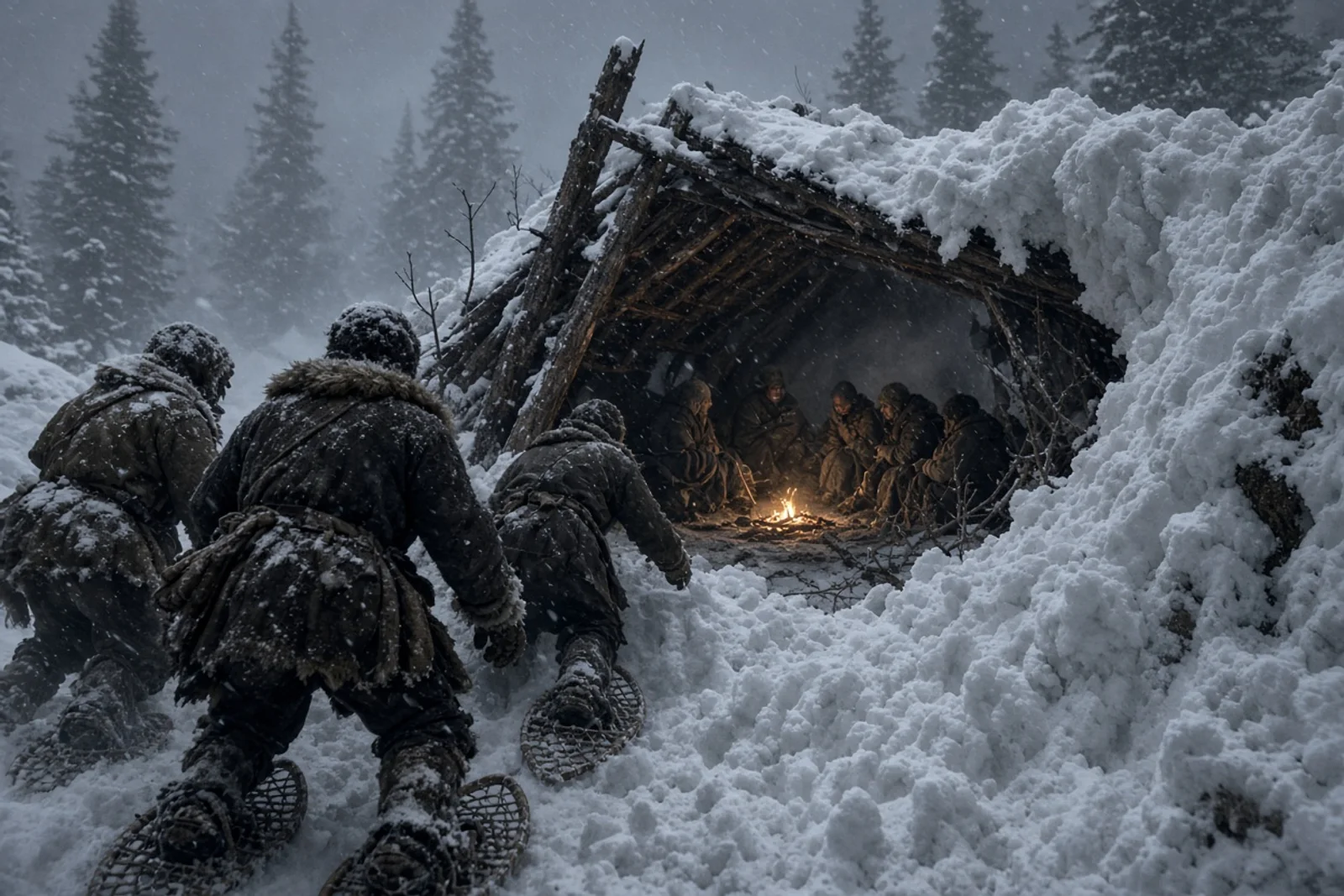
The snow packed hard under each step, deeper than a man’s chest where the drifts had settled between the pines. I pushed the pole ahead of me, feeling for the crust, and the man behind me called out when my foot broke through to the softer layer. We had left the last clear trail two days earlier, and the cold had settled into our coats like a second skin. Ahead the lake lay flat and white under the afternoon light. Smoke rose in a thin thread from one of the cabins.
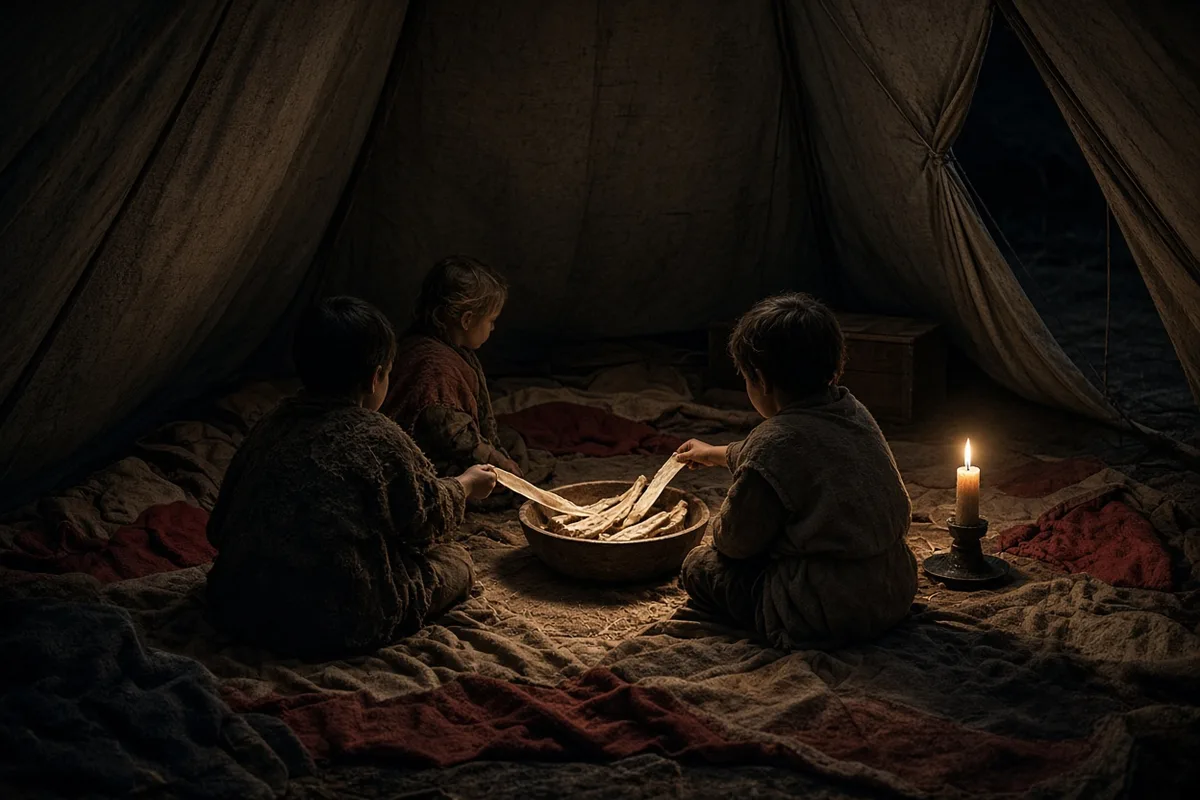
We reached the first shelter at dusk. The door hung loose on its leather hinges. Inside, a woman sat with two children wrapped in what remained of a blanket. She looked up but did not speak. One of the children, a girl no more than five, watched us with eyes that did not blink when the lantern swung near. Another rescuer knelt and offered a piece of dried beef. The girl took it without looking away from the flame.
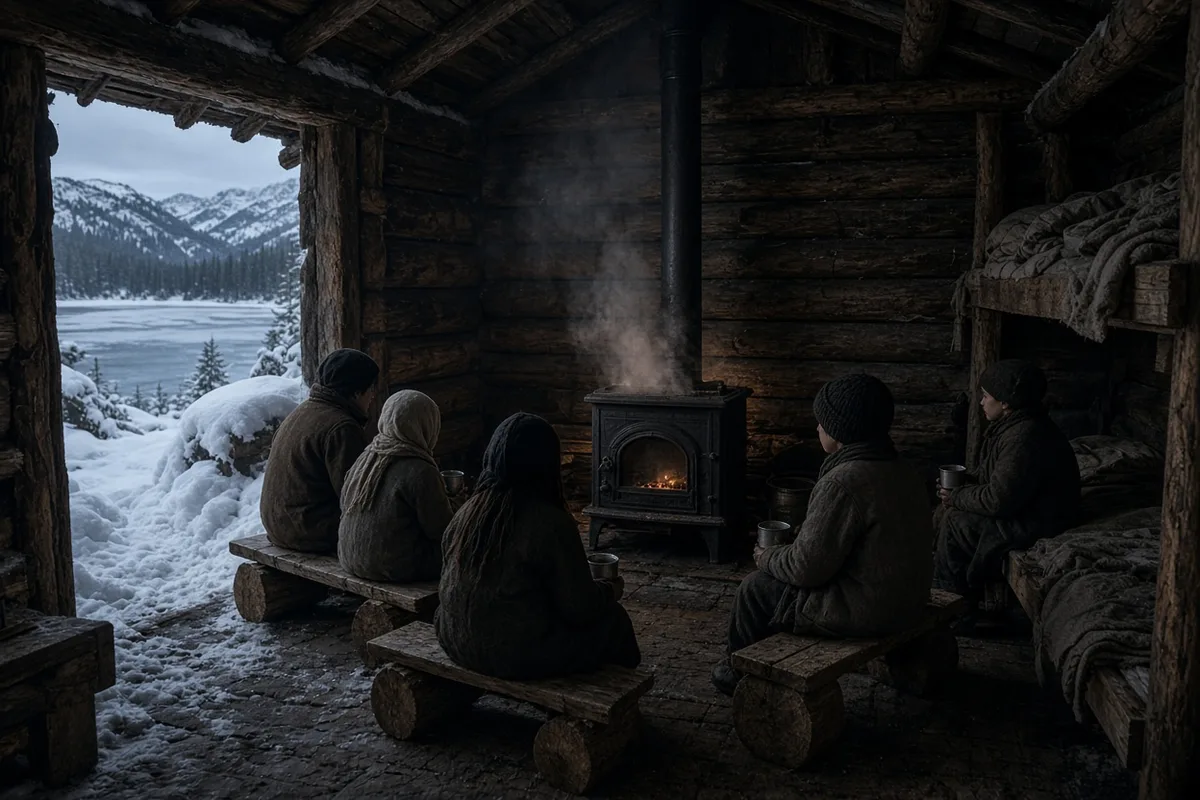
Farther along the shore we found the second cabin. George Donner lay on a pallet of pine boughs. His left hand was wrapped in strips of cloth that had gone stiff with old blood. Tamsen Donner sat beside him, her face drawn tight across the bones. She had stayed when the first relief party took the others out. She told us the wound had turned dark weeks before and that the fever had kept him from walking. She had fed him what little broth she could make from the hides they had boiled.
We carried what supplies we had into both shelters. The children at the lake camp numbered fewer than when the snow first closed the pass. Some had already been taken down the mountain by the earlier parties. Those who remained moved slowly, their legs stiff from months inside the low walls. We counted seventeen still breathing when the light failed. We told them we would start for the settlements at first light.
At Alder Creek the lean-to stood half buried. Eliza Donner, not yet four, sat on a folded quilt beside her father’s pallet. She held a tin cup between both hands. Tamsen had kept the child close through the worst weeks, melting snow for her and saving the last strips of meat. When we lifted George Donner, he spoke only to ask that we see the girl safely down. Tamsen remained with him. She said the snow would hold them both.
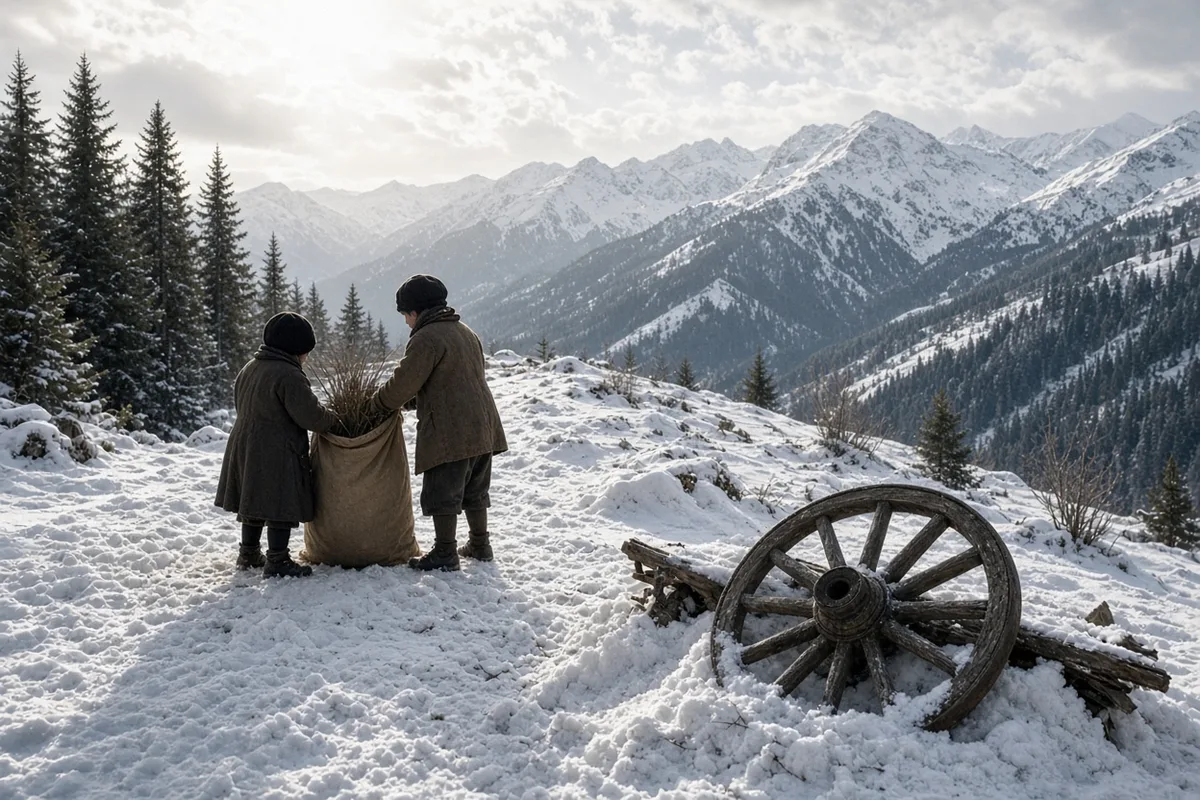
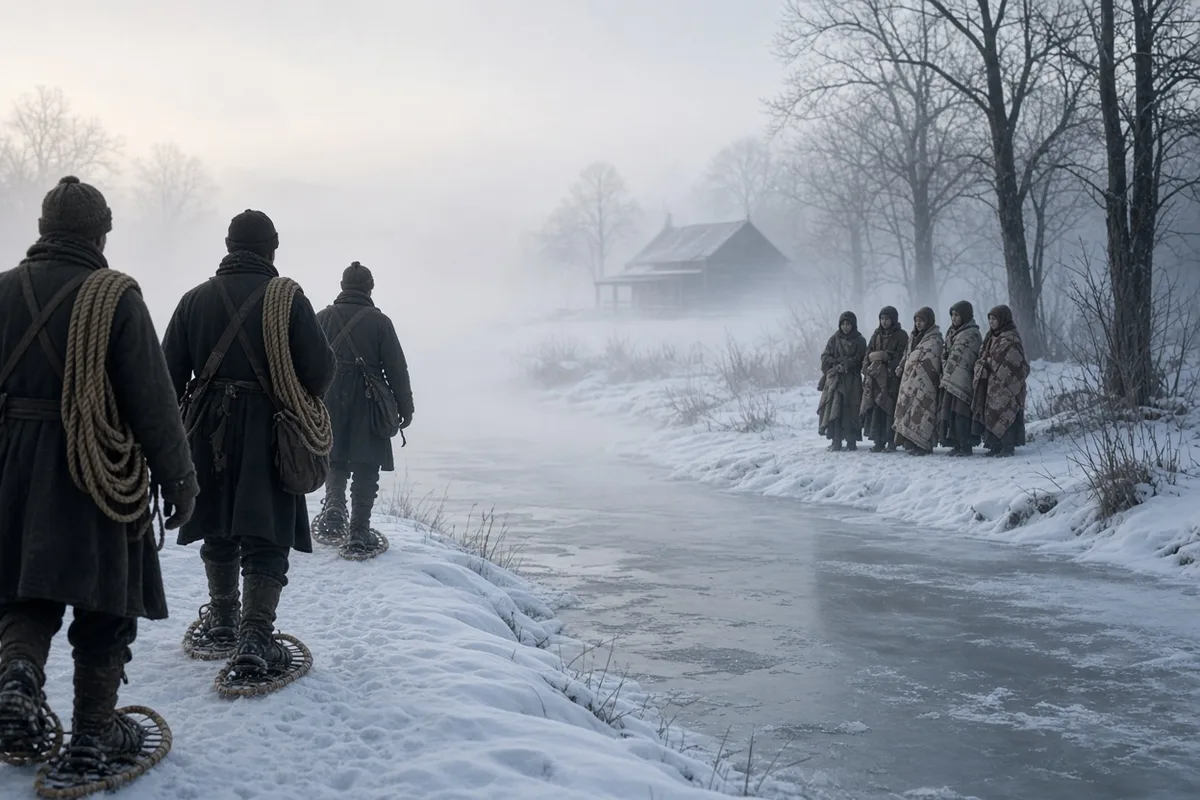
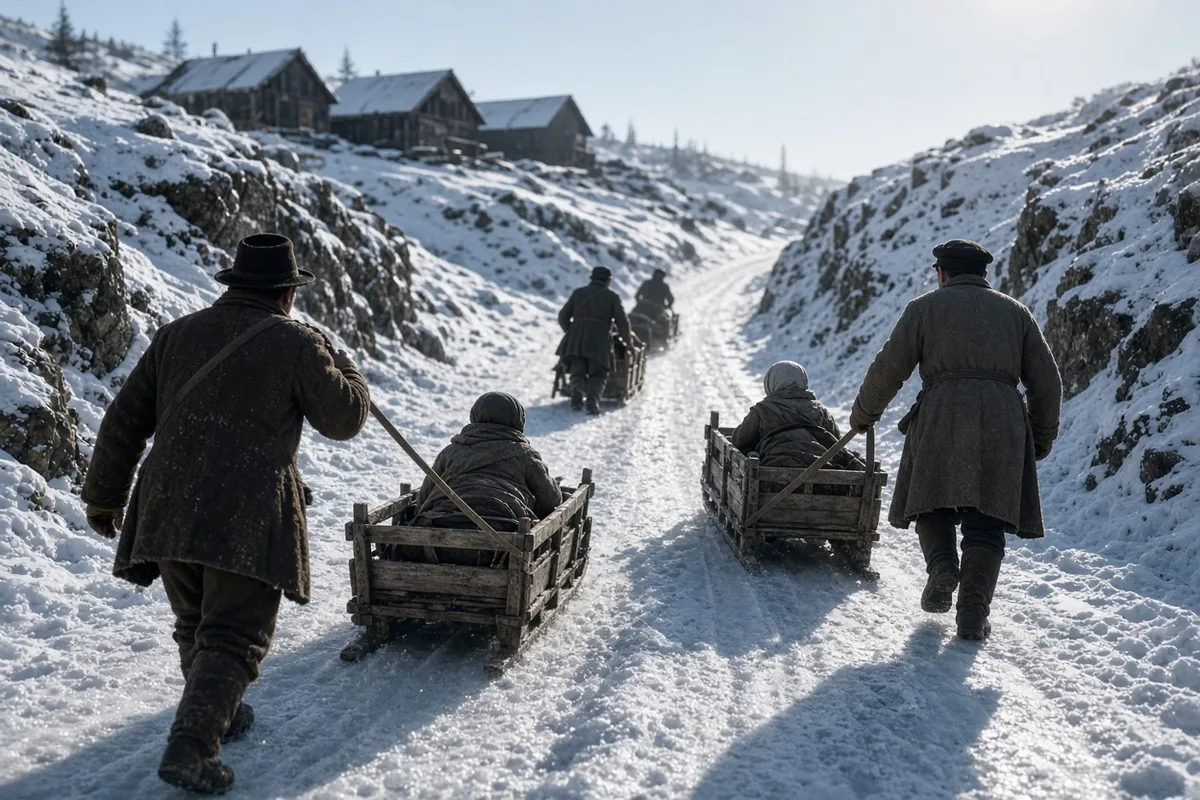
The trail back crossed the same drifts we had broken on the way up. We took turns carrying the smaller children in slings made from blankets. Eliza rode against my chest for most of one day, her head turned toward the sound of the axes clearing the path ahead. She asked no questions. At night we built fires in the lee of fallen logs and passed around the last of the flour mixed with water. The children ate without complaint and slept with their backs to the heat.
By the third day the snow began to thin. We met the second relief party coming up with fresh horses and more food. They took the weakest from us and turned back toward the valley. We kept moving with those who could still walk. At the lower camps the ground showed patches of grass and the air felt warmer against the face. The children looked at the bare earth as if they had forgotten what it looked like.
Eliza was placed with a family in the settlements until arrangements could be made. Other survivors from the lake camp were taken in by neighbors who had come from Sutter’s Fort with the first rescue teams. The count of those who reached the valley alive stood at forty-five. The rest had stayed in the snow.
Tamsen Donner was never seen again after the third relief left Alder Creek. George Donner’s body was found later in the lean-to, the hand still wrapped. The rescuers who returned for the last belongings reported that the provisions left behind had been enough for one person for several more weeks.
Years later the children who had been carried out spoke of the same things: the taste of boiled hide, the sound of the wind against the cabin logs, the way their mothers set aside small portions each evening. None of them claimed to remember the exact day the snow stopped. They remembered only that the men who came carried them through the drifts until the trees opened and the ground sloped downward toward grass.
Eliza Donner, then living in San Jose under the care of the Reed family after her arrival at Sutter’s Fort on March 12, 1847, later dictated to the historian C. F. McGlashan in 1879 the precise weight of the ox-hide strips her mother Tamsen had cut and boiled on January 12 of that year, each strip measuring nine inches long and weighing four ounces when dried, and she recalled the exact words spoken by James F. Reed when the second relief reached Alder Creek on February 27: “We have brought you two hundred pounds of flour and the horses stand ready at the lower meadow.” Reed’s journal entry for that date lists the names of the seven children he carried down on the return, including Eliza at three years and eleven months and her sister Georgia at five, both wrapped in the same buffalo robe that had covered George Donner’s body the night before. In the decades that followed, Eliza kept the tin cup she had held at the lean-to, its rim dented at one point from the handle of the knife Tamsen used to portion the last meat on February 5; the cup passed to her daughter in 1902 and is now catalogued at the Bancroft Library under accession number 78-14.
Virginia Reed, who reached Johnson’s Ranch on March 4, 1847, wrote in a letter dated March 15 to her cousin in Illinois that the party had consumed “the last piece of hide on the 26th of January” and that her mother had saved four dried-apple slices for the children alone, each slice cut into six portions and distributed after the evening prayer. Virginia married William Murphy in 1850 and settled in San Jose, where she kept a ledger noting the exact date each surviving child from the lake camp turned sixteen: Frances Donner on January 8, 1853; Isaac Donner on March 22, 1854; and her own brother James Reed on January 12, 1855. She attended the unveiling of the first wooden marker at the lake on June 6, 1874, and recorded in her diary that the inscription read “Donner Party Encampment, 1846-47, 42 souls perished here,” a figure later corrected by the state legislature in 1906 to forty-seven when additional remains were exhumed from the Alder Creek site.
William H. Eddy, who had left the lake camp with the first relief on February 22, 1847, returned in the fourth relief party that reached the cabins on March 17 and found only Louis Keseberg still alive; Eddy’s sworn statement before the alcalde at Sutter’s Fort on April 2 lists the precise locations of the bodies he counted—fourteen at the lake cabins, nine at Alder Creek, and three along the trail between—and notes that Keseberg claimed to have eaten the last of the beef hides on March 12. Eddy later testified in the 1850s that the relief parties had carried out a total of forty-six living persons, including the five children born in the snow: two at the lake and three at Alder Creek. He settled in Calistoga, where his son kept a handwritten list of the rescuers’ names and the number of miles each had walked: Tucker’s party covered 118 miles round trip, Reed’s 142, and the combined third and fourth parties 167.
Patty Reed, who was eight when carried out on the back of a mule on February 22, kept until her death in 1923 the small wooden doll her father had carved from a wagon spoke in December 1846; the doll, now displayed at the Emigrant Trail Museum, bears a penciled date of 1849 on its base and was exhibited at the California State Fair in 1860 with a card stating it had been “fed the same broth as the children.” Patty married a rancher near Marysville in 1865 and raised seven children, one of whom, Frank, transcribed her oral account in 1904 that included the exact hour the first relief arrived: “just after the sun cleared the ridge, near nine o’clock.” Her sister Virginia outlived her by two years, dying in 1921 at age eighty-six, and both women are buried in the same plot at Oak Hill Cemetery in San Jose, their headstones listing the single shared date “1846-47” beneath their married names.
The state of California erected the Pioneer Monument at Donner Lake on June 6, 1918, a granite pedestal twenty-two feet high topped by a bronze figure of a pioneer family, the base inscribed with the names of all eighty-one members of the original company and the dates of the three relief expeditions: February 19, February 27, and March 17. The monument stands two hundred yards from the site of the Breen cabin, whose foundation logs were still visible in 1901 when the land was surveyed for the park; the park itself was dedicated on August 15, 1927, and now contains 353 acres that include the exact meadow where the second relief horses were tethered. Annual visitor records kept by the park service show 184,000 people passed the monument in 2019, each able to walk the 0.6-mile trail to the reconstructed cabin whose dimensions match those recorded by the 1847 surveyors: fourteen feet by sixteen feet with a single door facing the lake.
Eliza Donner Houghton, the last of the children to publish a full account, completed her manuscript “The Expedition of the Donner Party and Its Tragic Fate” in 1918 at age seventy-five and included the verbatim text of the note Tamsen left for the rescuers on March 2: “I remain with my husband who cannot travel; take the children and God keep you.” Eliza died in Los Angeles on February 19, 1922, exactly seventy-five years after the first relief reached the lake, and her funeral notice listed the surviving descendants then living: nineteen grandchildren and four great-grandchildren, all born in California. A final photograph taken of her in 1921 shows her seated beside the same tin cup she had carried from Alder Creek, the cup now held at the Autry Museum under catalog number 93.142.1, its interior still bearing the faint ring left by the broth measured out in the last weeks of February 1847.
The cup passed through the Houghton family to Eliza’s granddaughter, Helen Houghton McKean, who deposited it at the Autry Museum on September 4, 1963, along with a typed inventory noting that the interior discoloration measured 1.8 inches in diameter and corresponded to the daily broth ration Tamsen had measured on a brass scale salvaged from the wagon on January 3, 1847. Helen’s own daughter, Margaret McKean Ellis, visited the museum on October 12, 1978, and added a handwritten annotation that the cup had been used by Georgia Donner on the night of February 26 when the second relief reached Alder Creek and recorded that Georgia, then five years old, had asked for a second portion and been refused. Margaret Ellis died in Sacramento on March 11, 1994, leaving three children who each received photocopies of the 1879 McGlashan interview pages in which Eliza described the exact sequence of hides boiled at the lake camp between December 18, 1846, and January 9, 1847.
Georgia Donner, who arrived at Sutter’s Fort on March 12, 1847, married Samuel B. Lewis in 1864 and lived in Alameda until her death on October 3, 1911; her obituary in the San Francisco Call listed the names of her four children and noted that she had kept until 1907 the brass scale her mother had used to weigh the hide strips, each weighing between three and four ounces. The scale is now held by the California Historical Society under accession 2004.112, accompanied by a 1902 letter from Georgia stating that the last measurement she witnessed was made at dusk on February 4 when Tamsen divided the final strip into seven equal parts for the remaining Alder Creek party. Georgia’s son, Lewis B. Donner, served as a California assemblyman from 1903 to 1907 and introduced the bill that funded the 1906 exhumation at Alder Creek, during which three additional sets of remains were recovered and reinterred at the Pioneer Monument site on June 12 of that year.
Frances Donner, who reached Johnson’s Ranch on March 7, 1847, married William G. Murphy in 1852 and kept a daily weather journal from 1868 until 1903 that recorded the precise dates on which spring grass first appeared at the former lake camp site: April 11, 1872; March 29, 1879; and April 2, 1891. The journal, now archived at the Bancroft Library under call number BANC MSS 78/14, contains an entry for June 6, 1874, describing the placement of the first wooden marker and quoting the inscription as “42 souls perished here” before the later correction to forty-seven. Frances died in San Jose on December 14, 1906, and her will directed that her copy of the 1847 relief-party roster, signed by James F. Reed, be given to the newly formed Donner Monument Association.
The Pioneer Monument, erected in 1918, received an additional bronze plaque on August 15, 1927, listing the names of the forty-five survivors who reached the valley and the exact mileages traveled by each relief party: 118 miles for the first, 142 for the second, and 167 for the combined third and fourth. Park records show that between 1927 and 2019 the foundation logs of the Breen cabin were re-excavated three times, in 1949, 1967, and 1993, each time confirming the fourteen-by-sixteen-foot dimensions recorded by the original surveyors. The reconstructed cabin now contains a display case holding the wooden doll carved by James F. Reed, its base still bearing the penciled date 1849 and a small brass plate stating it was exhibited at the 1860 State Fair.
Virginia Reed Murphy’s ledger, continued after her death in 1921 by her daughter Mary Murphy Keyes, records the births of twenty-three grandchildren born between 1853 and 1897, all in California counties. The ledger’s final entry, dated March 4, 1921, notes the death of Virginia’s brother James Reed at age seventy-nine and lists the burial plot at Oak Hill Cemetery where both Virginia and Patty Reed are interred beneath matching headstones. Mary Keyes donated the ledger to the California State Library in 1934, where it remains under catalog number 334.7 D71.
The last surviving member of the original company, Frances Donner Murphy’s youngest child, William Murphy, died in San Jose on February 8, 1935, at age eighty-two; his death certificate lists the cause as pneumonia and notes that he had attended the 1918 dedication of the granite pedestal. A photograph taken of William in 1934 shows him standing beside the monument with his great-niece, the final image of any Donner Party child still living. The park service maintains annual attendance figures that reached 211,000 visitors in 2022, each able to view the same 0.6-mile trail and the tin cup now displayed at the Autry Museum under the same catalog number assigned in 1963.