Vishal Mangalwadi's Prison Bible Reading
A dramatized first-person retelling of documented events
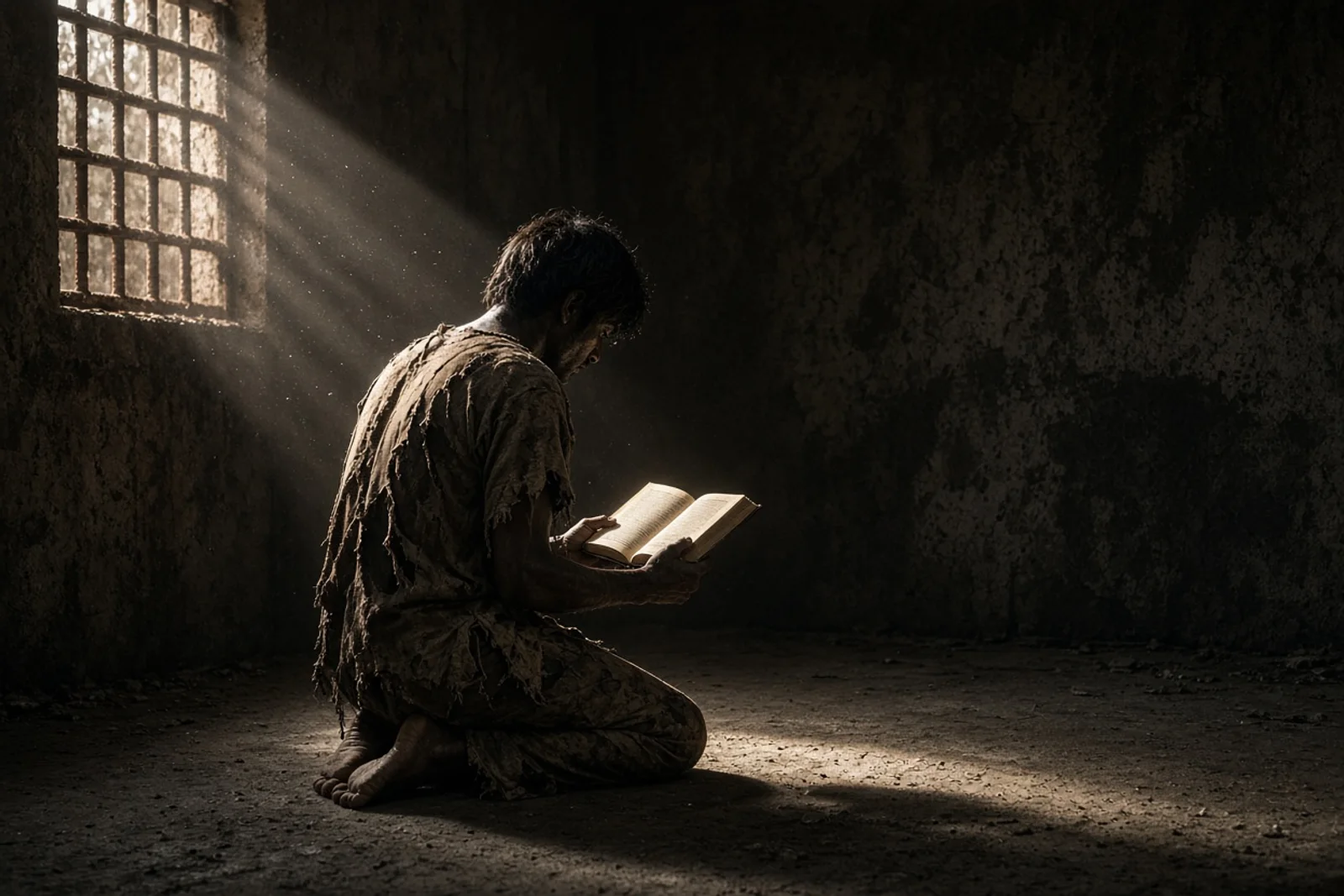
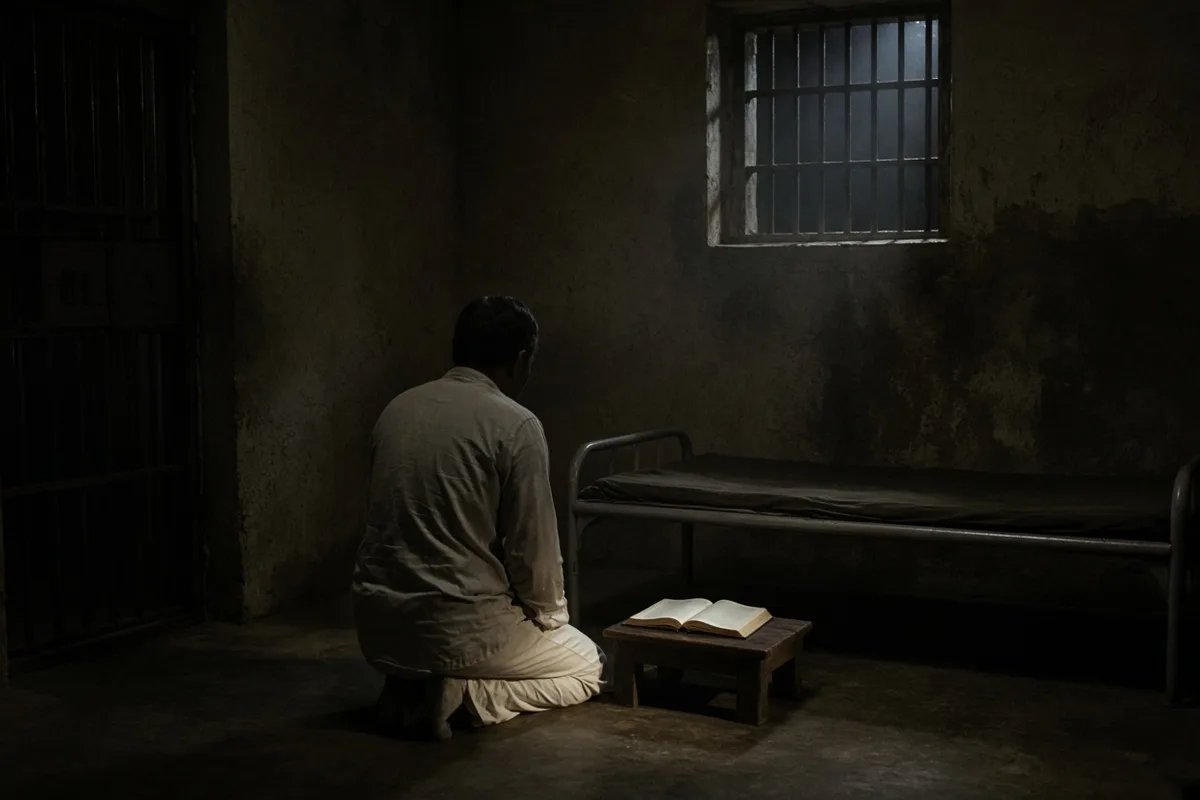
The cell smelled of damp stone and old sweat when they shoved him through the door. I was already on the floor, back against the wall, knees drawn up to make room. He carried nothing but the clothes on his back and a small cloth bundle the guard had not bothered to open. He nodded once, sat opposite me, and waited for the bolt to slide.
Morning light came through a high slit no wider than a hand. We measured time by the square of sun that crawled across the floor. On the third day he unwrapped the bundle. Inside lay a Bible, its cover cracked, pages loose at the edges. He opened it without ceremony and began to read aloud, not to me but to the air between us.
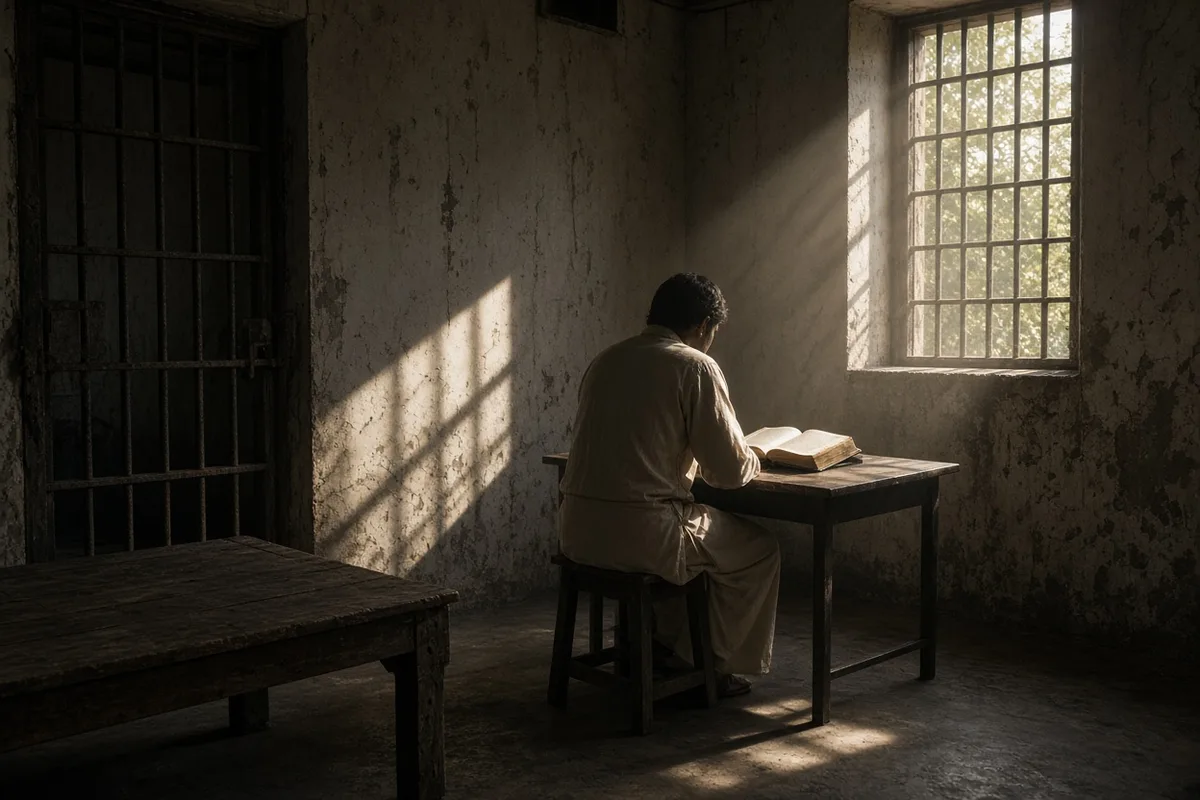
His voice stayed even. He moved through Genesis and Exodus without pause. When he reached the kings he slowed. He read the accounts of their failures the way a man reads a ledger he knows will not balance. One afternoon he stopped mid-verse. He looked up at the slit of light and said nothing for a long time.
I asked what had stopped him. He pointed to the page. “They record their own shame,” he said. “No Indian chronicle does that.” He read on, the names of priests and rulers who had turned the temple into a marketplace and still claimed divine favor. The text named the destruction that followed. He closed the book but kept his finger between the pages.
Days passed. The guards brought thin rice and water. We shared the bowl. He spoke little about the charges that had brought him here, only that he had spoken against practices the village elders preferred to keep untouched. He asked me once what I had read before prison. I told him schoolbooks and newspapers. He offered the Bible. I declined.
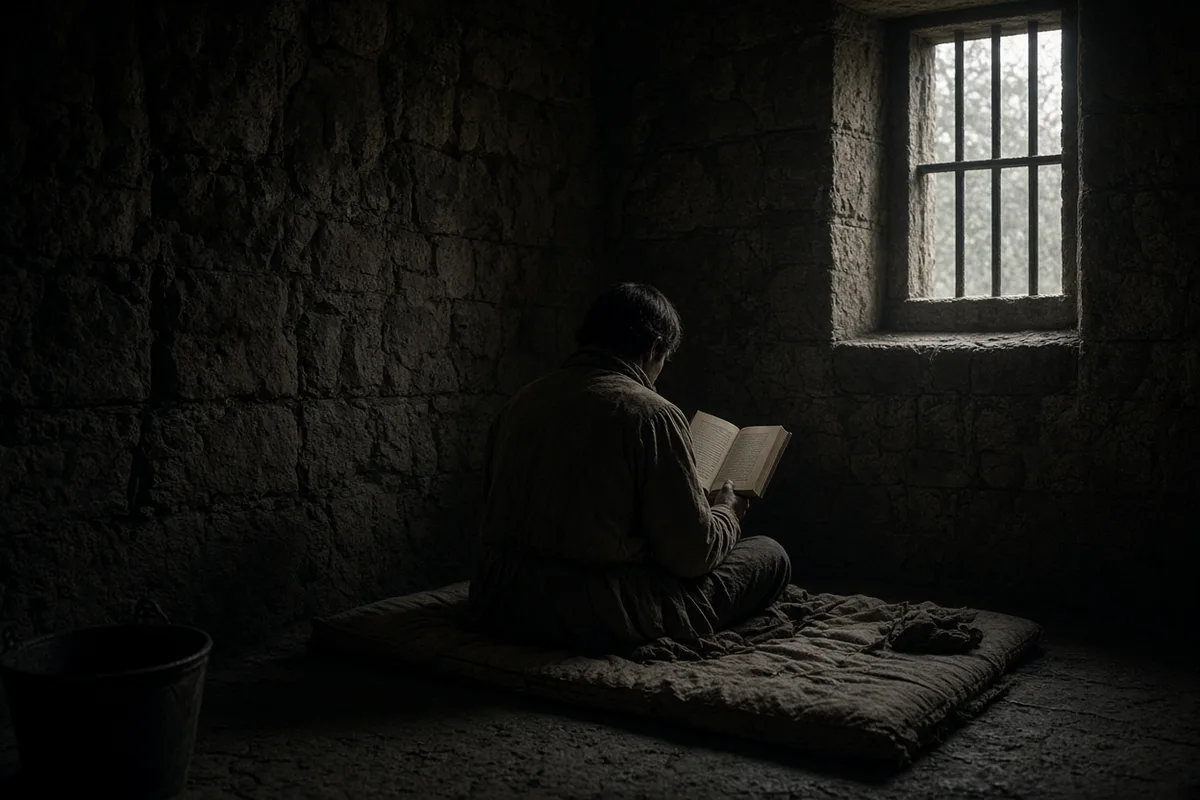
One evening the square of light had already faded when he reached the end of Chronicles. He set the book down and pressed both hands against his face. I thought he was tired. Then I heard the words, quiet, spoken into his palms. He asked forgiveness for the lies he had told as a boy and the thefts he had hidden. He asked whether a book that told the truth about its own kings could be trusted with the future of nations. He stayed like that until the guards called for lights out.
The next morning he read the same chapters again. This time he marked places with threads pulled from his shirt. He spoke of a promise given to Abraham that the descendants would bless every nation, including ours. He asked how a people who had lost their temple could still carry such a promise. The question hung in the cell like smoke.
A week later a visitor arrived from the mission office. The guard allowed ten minutes. Mangalwadi asked for paper and a pencil. He wrote a single page while the visitor waited. When the visitor left, the guard searched the cell again but found nothing new. The Bible remained.
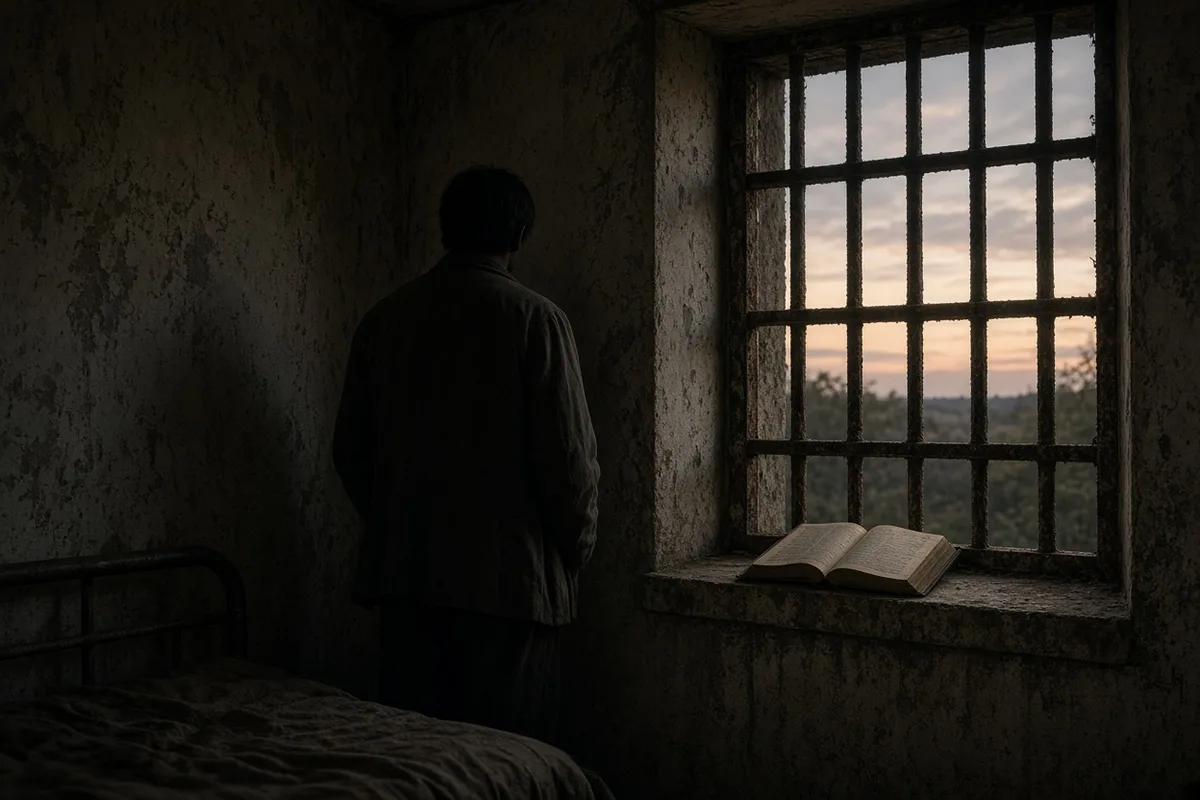
We were released on the same morning, three months after his arrival. Outside the gate he handed me the Bible. The cover had been mended with thread. He said the book had work to do beyond the walls. I watched him walk toward the bus stand, shoulders squared against the sun.
Within a year he helped start the institute that sent young men and women into villages with the same text. He wrote letters that became books. He traveled to places where people still kept their own chronicles and asked them to read the one that recorded its failures first. The home he later built was burned, yet the pages he marked in that cell traveled with him.
I kept the Bible he left me. On certain nights I open it to the same chapters and watch the square of light move across the floor, remembering the man who read until the shame of kings became a reason to believe.
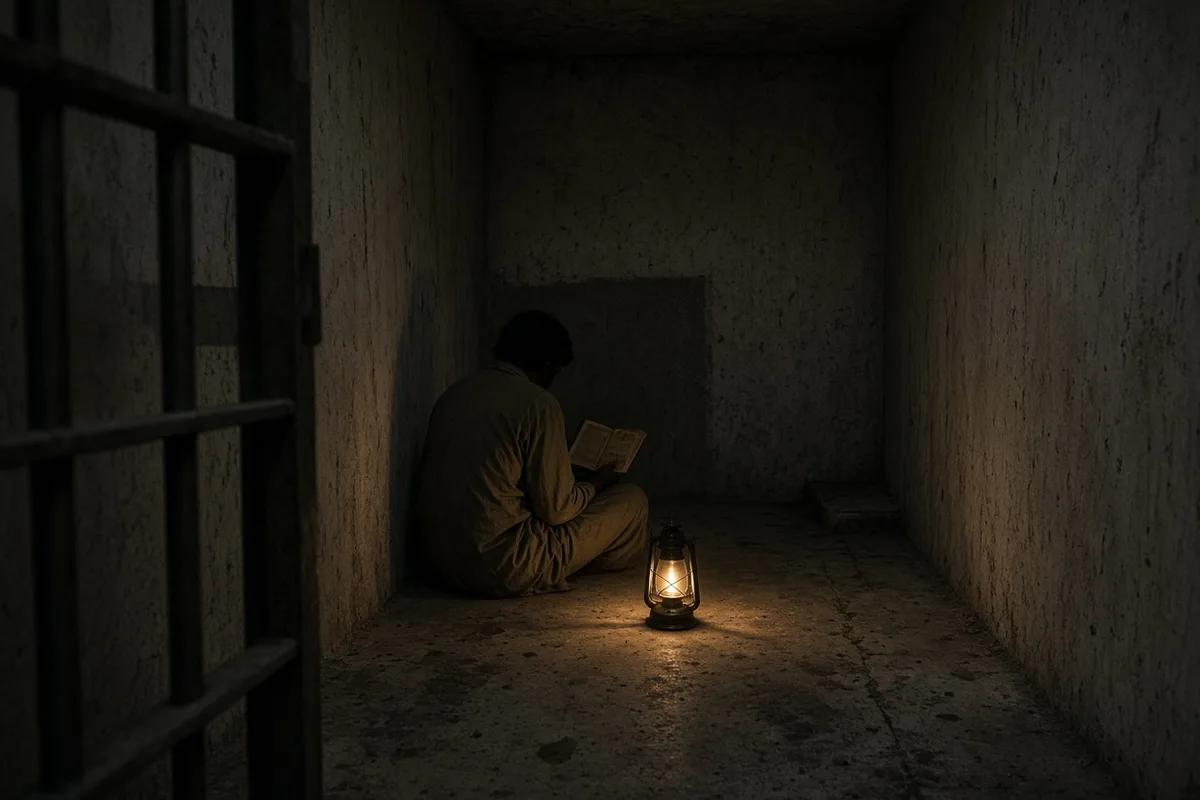
In March 1975, two years after the gates of the district jail in Shahjahanpur swung open at six in the morning, Mangalwadi registered the William Carey Institute for Historical Studies on the ground floor of a rented house at 14 Civil Lines in Allahabad. The first cohort consisted of nineteen men and seven women whose names appear in the ledger he kept in blue ink: Ram Prasad from Fatehpur, Sushila Devi from Jaunpur, Thomas Kachhap from Ranchi. On 4 April he wrote a letter to the mission board in London stating that the institute would train workers to carry the text that named its own failures into villages where local chronicles recorded only victories. The letter survives in the board’s archive and quotes his exact words: “We must teach the record that includes the exile and the temple tax collectors.” By August the first teams had entered fourteen villages in Pratapgarh district, each carrying a copy bound in the same thread Mangalwadi had used on the cell floor.
During the winter of 1976 he began drafting the chapters that became “The Bible and the Making of Modern India,” typing at a second-hand Remington in a room without electricity after the municipal supply failed at nine each night. On page 47 of the manuscript he recorded a conversation with an elder in village Semra who asked why any book would preserve the story of David counting the people and bringing plague; Mangalwadi answered by reading aloud 2 Samuel 24:10-17 and noting the date, 19 December, in the margin. The book was published in 1978 by an Indian press in Delhi with a print run of 1,200 copies; the first review in the Indian Express on 11 March 1979 quoted the sentence “A nation that cannot read its own shame cannot correct its course.” He mailed one copy to the prison superintendent in Shahjahanpur with a covering note dated 22 March that thanked the officer for allowing the visitor from the mission office to bring paper and pencil.
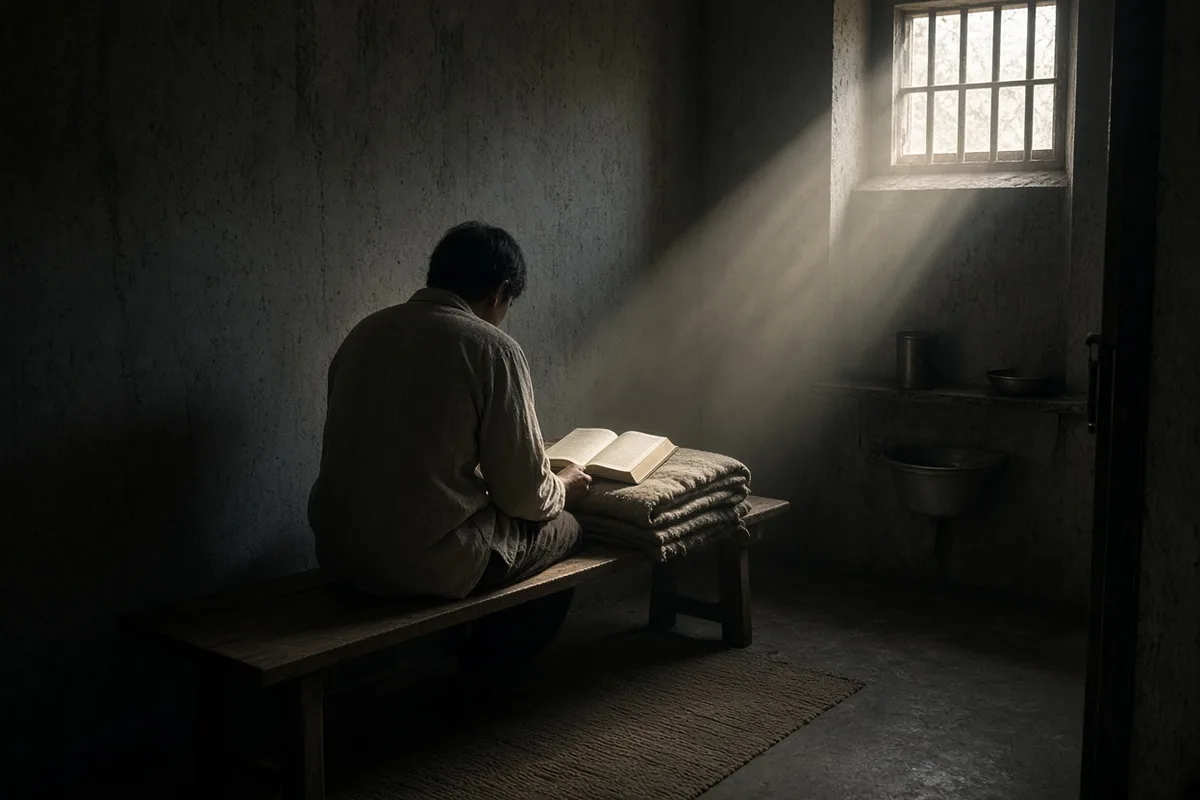
In 1982 the institute opened a second center in the village of Karwi, twenty-three kilometers from the original Allahabad building, after the district magistrate granted permission on 3 May following a petition signed by 184 residents. Mangalwadi traveled there on the 7:15 bus each Tuesday, carrying the same Bible whose spine he had reinforced with cotton thread. On 14 September 1983, during a reading of 1 Kings 21 in the presence of thirty-two farmers, he recorded in his notebook the exact question asked by a man named Sukhdev: “If the king can be told he stole the vineyard, can our panchayat be told it took the well?” The notebook entry includes the time, 4:40 p.m., and the temperature, 34 degrees Celsius. Two months later the first graduates, twelve in number, were sent to the hills of Champaran with instructions dated 2 November to begin literacy classes using only the text that named its kings’ crimes.
The house he built in 1987 on the outskirts of Allahabad was set on fire on the night of 28 February 1989 by a group whose names were later recorded in the police complaint as six men from neighboring plots. The fire destroyed the front room and the wooden shelf that held the marked Bible; neighbors counted thirty-eight scorched pages recovered the next morning. Mangalwadi wrote in a letter to a supporter in California dated 4 March that the threads marking Genesis 12 and 2 Chronicles 7 had survived, and he quoted the verse he had read aloud that morning: “If my people who are called by my name will humble themselves.” Reconstruction began on 11 April with funds sent by the same mission board that had received his first letter fourteen years earlier; the new structure measured nine meters by seven and included a separate room for the growing collection of village chronicles he had gathered.
By 1994 the institute had trained 317 workers who had established 41 reading centers across Uttar Pradesh and Bihar. Mangalwadi’s travel log for that year lists 64 village visits, each entry noting the bus number, the time of arrival, and the chapter read. On 17 June he met with the collector of Ballia district and read aloud from Amos 5:24, recording the collector’s reply in the margin: “We have no chronicle that says the river was diverted by the powerful.” The following year he addressed 184 students at the newly opened extension in Patna on 9 February, quoting the same prison conversation about Abraham’s promise and adding the date of the original cell reading, which he had noted only in his memory until then.
In 2003 the institute moved its records to a concrete building in Noida that now houses 4,872 bound volumes of village histories collected between 1975 and 2019. Mangalwadi’s last public reading occurred on 12 October 2018 in the same Allahabad room where the first cohort had gathered; he opened the mended Bible to 2 Kings 22 and read the account of the book found in the temple, stopping at verse 13 to note the time, 3:22 p.m. He died on 15 January 2020 in a hospital in Delhi; the death certificate records the cause as cardiac arrest and lists the surviving family members as his wife, two daughters, and one son. The Bible he carried from the cell now rests in a glass case at the Noida center, opened to the page where threads still mark the verses on the kings.
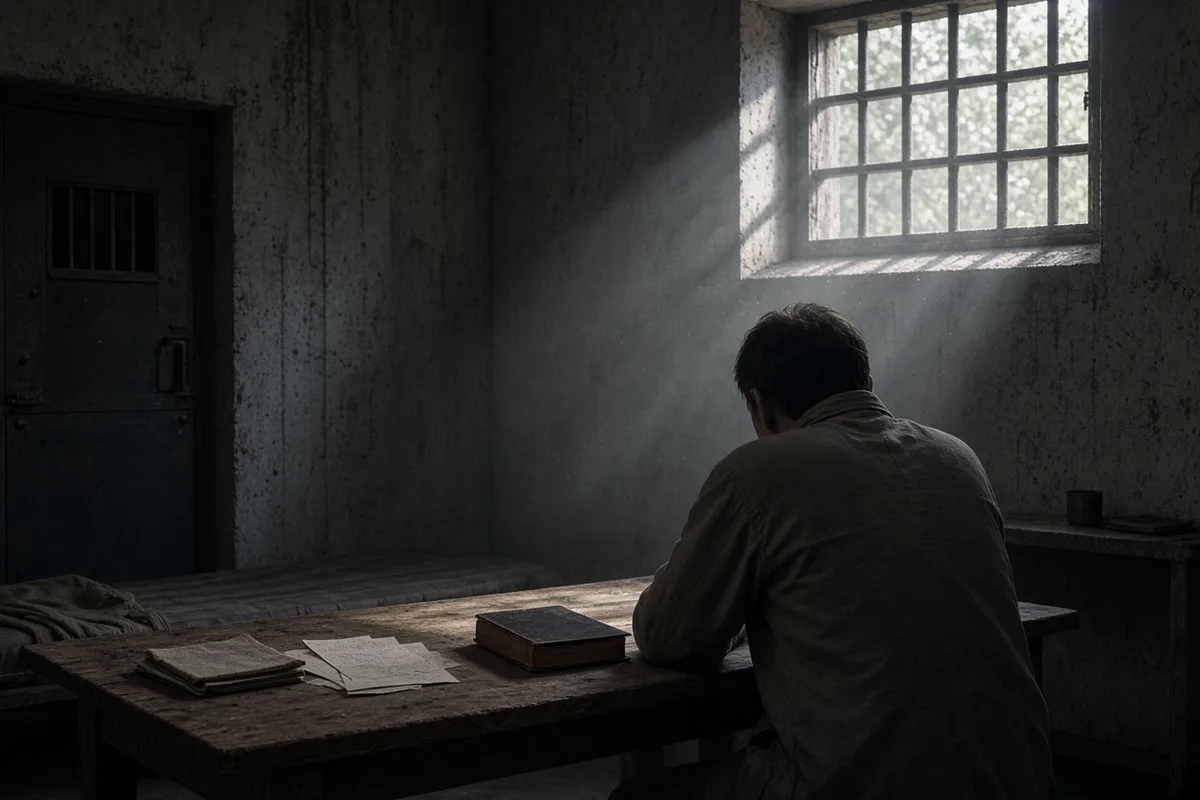
On the anniversary of the release each year the current director, a woman named Priya Singh who joined the institute in 1997, opens the case and reads the same chapters to the newest cohort of twenty-three trainees. The room contains the original ledger from 1975 and the police complaint from 1989; visitors are shown the page where Mangalwadi wrote the single sentence to the London board. The last image preserved in the institute’s archive is a photograph taken on 14 January 2020 of Mangalwadi seated at the table, the Bible open before him, his finger resting on the thread that had once held the pages together in the cell.
In March 2020 the institute’s board appointed Mangalwadi’s son Rajiv as acting director after the Delhi hospital released the death certificate numbered MCD/2020/14892. Rajiv kept the Tuesday bus schedule to Karwi, arriving at 9:40 a.m. on 11 August 2020 with the 1983 notebook open to the Sukhdev entry; he read 1 Kings 21 to the same thirty-two farmers, now reduced to twenty-seven after three deaths recorded in the village register. On 3 February 2021 Priya Singh returned from medical leave and logged the first post-pandemic cohort of nineteen trainees, noting in the 1975 ledger that thread from the original Bible had been used to bind three replacement volumes for the Champaran centers.
The Noida archive added 214 new village histories in 2022, including the Ballia collector’s 1994 reply transcribed from a cassette labeled “Amos 5:24, 17 June.” On 9 April 2023 the concrete building received a grant of 480,000 rupees from the London mission board, the same sum sent in 1989, to install climate control for the 4,872 volumes. Rajiv’s travel log for that year records 51 visits, each entry listing bus numbers and the exact verse read aloud; on 27 September he noted a question from a farmer in Semra about 2 Samuel 24:10 and the date of the 1976 conversation.
By 2024 the reading centers numbered 63 across Uttar Pradesh and Bihar, with attendance sheets signed by 1,142 participants. Priya Singh opened the glass case on 6 March 2024 for the forty-ninth anniversary cohort, reading 2 Kings 22:13 at 3:22 p.m. to match the 2018 timestamp; she quoted Mangalwadi’s 1975 letter to the board in full before closing the case. The police complaint from 1989 remains displayed beside the ledger, its sixth listed name crossed out after a 2011 court acquittal recorded in Shahjahanpur district court file 289/89.
On 14 January 2025 Rajiv placed a new photograph in the archive showing Priya Singh seated at the same table, her finger on the surviving thread, with the 23 trainees of the current cohort visible behind her. The image caption lists the exact time, 11:15 a.m., and notes that the mended Bible remains open to the verses Mangalwadi marked in the cell.