William Wilberforce Turns to Christ at 25
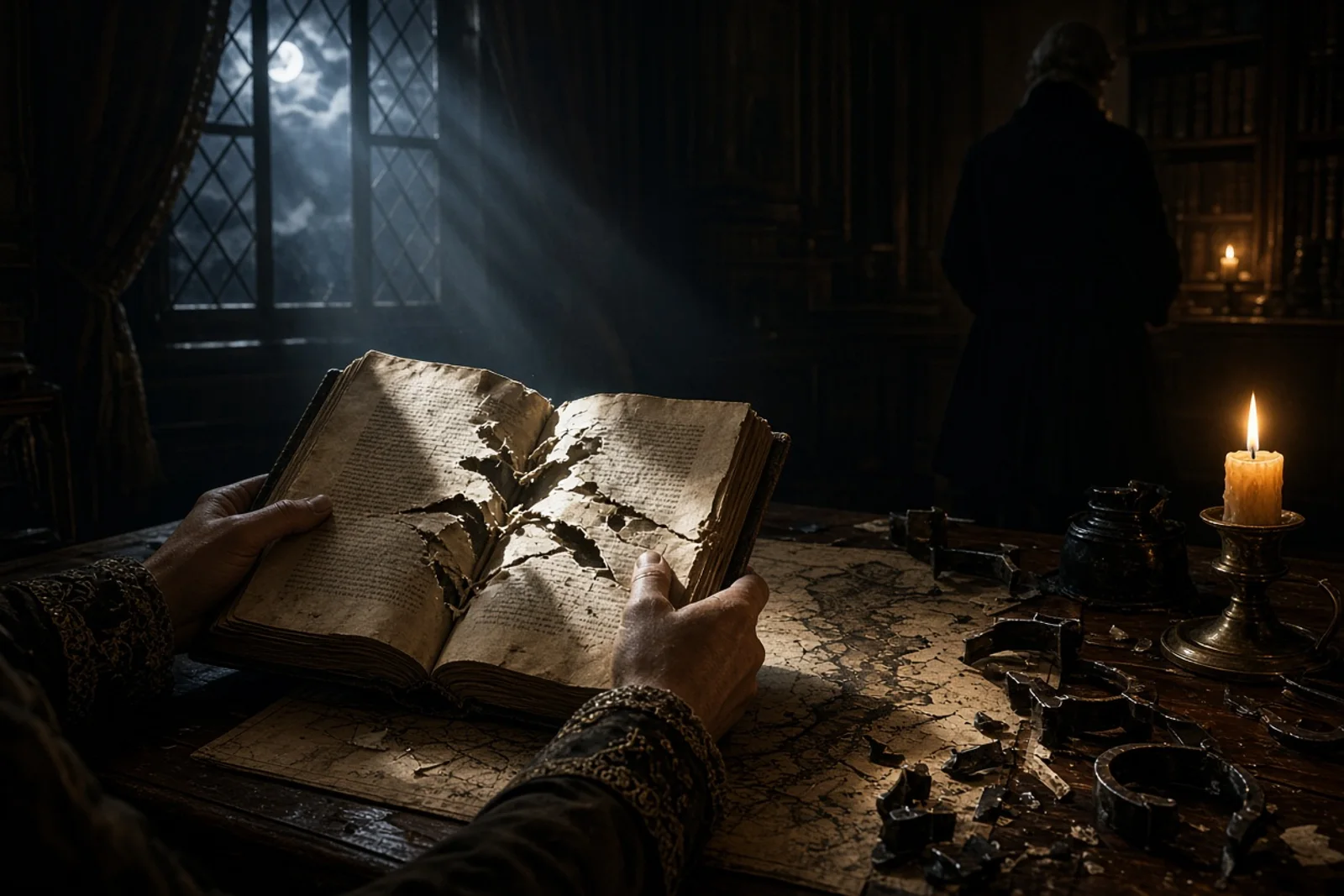
A dramatized first-person retelling of documented events
The carriage wheels struck the ruts outside Cambridge and the whole frame shuddered, jolting me against the door. Wilberforce sat opposite, legs crossed at the ankle, one hand resting on the window ledge as if the motion were no more than a breeze. He had returned from the tour thinner than when we left, his coat hanging looser at the shoulders. Milner rode beside him, already deep into some point about the Greek text he carried in his coat pocket.
For weeks the talk had been steady, never urgent. They read aloud in the evenings at the inns, the Bible open between them on the table, a single candle throwing their shadows against the wall. Wilberforce asked questions the way he once asked them in the House, precise, testing each answer against the next. Milner answered without hurry. The questions changed as the miles passed.
By the time the carriage reached London the light had gone. Wilberforce stepped down first and stood for a moment in the street, looking at the familiar door of his own house as though he had forgotten the number. He went inside without calling for the servants. I waited with the luggage until the lamps were lit.
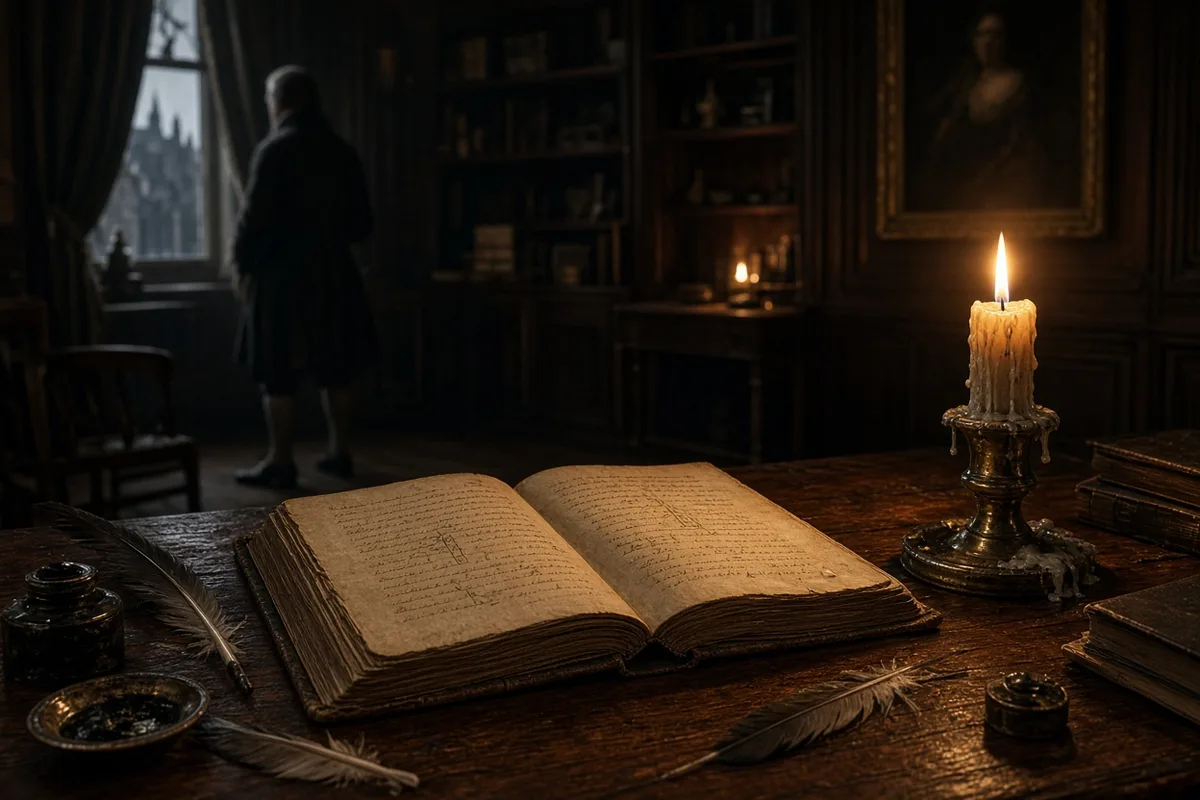
In the weeks that followed he kept to his rooms more than usual. Letters from Pitt lay unopened on the desk. He walked the garden after dark, sometimes until the watch called the hour. One evening he sent for me and asked whether Newton still kept the same hours at St Mary Woolnoth. I said he did. Wilberforce nodded once and told me to make no further arrangement.
He went alone the first time. When he returned the collar of his coat was turned up against a light rain that had not yet reached the ground. He did not speak of what had passed. Two days later he went again, and this time he took me as far as the vestry door and asked me to wait on the bench outside.
Newton’s voice carried through the half-open door, low and steady, the same tone he used from the pulpit. Wilberforce’s answers came shorter, more broken. I heard the name of Christ spoken plainly, without the flourish he once gave it in debate. When they came out Newton placed a hand on his shoulder and said the work ahead would not be less because it was done in Parliament rather than in a pulpit. Wilberforce stood still for a moment, then thanked him.
After that the house changed its rhythm without announcement. The late suppers with Pitt’s circle grew fewer. The Bible that had traveled with us now stayed open on the table in the morning room. He read it before the post arrived. When visitors came he still laughed at the old stories, but the laughter ended sooner and he turned the talk toward the petitions already reaching members about the ships leaving the African coast.
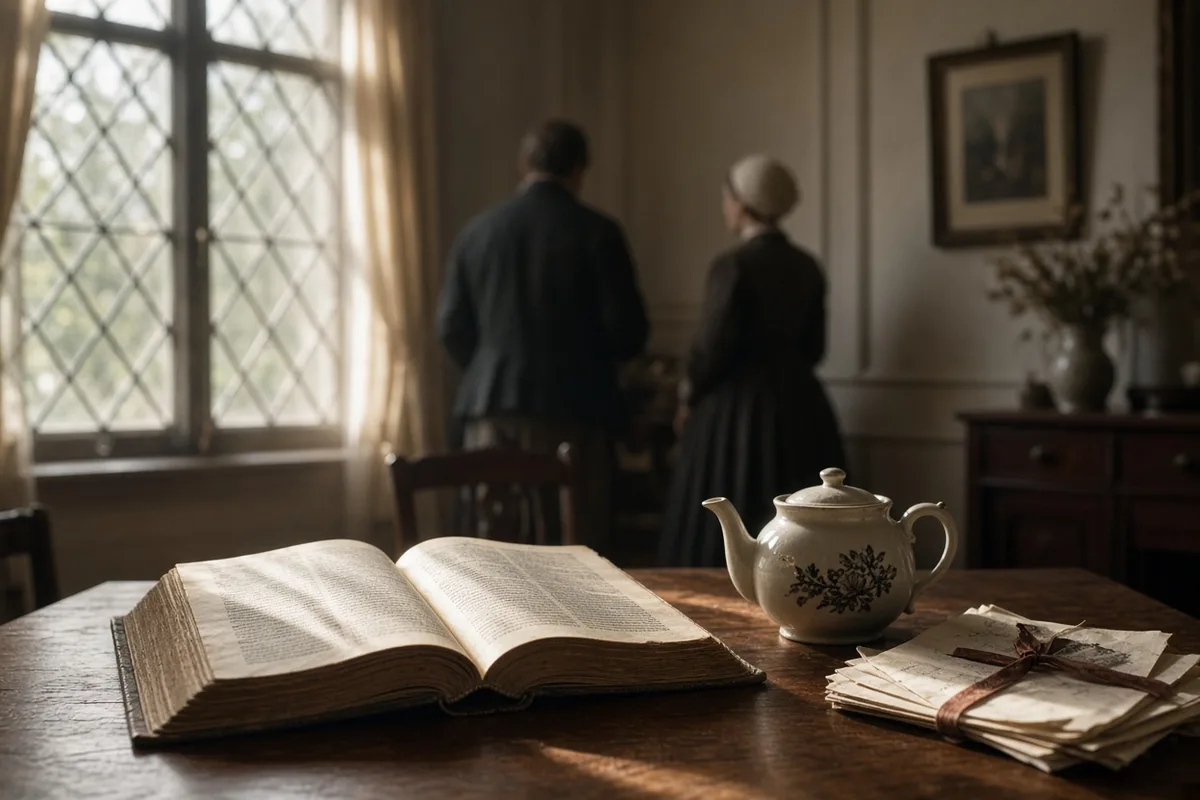
By the spring of 1787 the petitions lay in stacks on the floor of his study. He marked the margins of each one with the same small, even hand he used for his own notes. One afternoon he asked me to carry a copy to Newton for his opinion. Newton sent it back the next day with a single line written across the top: the trade would not end by itself.
Wilberforce began to speak of the matter in the House with the same plainness he had learned at Newton’s door. The old ease remained in his voice, the quick turn that once drew laughter from both sides, yet the subject no longer shifted when the laughter came. He stayed late after the division bells, walking the corridors with the petitions rolled under his arm.
Newton continued to receive him without appointment. On one visit Wilberforce asked whether a man could keep his seat and still serve the purpose he now saw clearly. Newton answered that Joseph had kept his place in Egypt and Daniel had kept his in Babylon. Wilberforce repeated the names quietly to himself on the walk back.
The letters he wrote that summer carried the same measured tone he had used with Milner on the road. He asked for evidence from the captains, from the surgeons, from the merchants who had once counted the trade an ordinary risk. The answers arrived in bundles that filled the hallway. He read each page through before he set it aside.
In the autumn he stood again in the House and moved that the trade be considered with a view to its gradual abolition. The motion passed to committee. Outside the chamber he spoke to no one of the nights he had spent walking the garden after the first reading. He only asked whether the committee rooms would be ready by the following week.
Newton died the next year. Wilberforce received the news while the committee still sat. He folded the letter, placed it inside the Bible on his desk, and returned to the evidence that still needed sorting. The petitions continued to arrive. He kept the same hours he had kept since the carriage wheels first brought him back from the Continent, rising before the post, reading the book that had traveled with him, and marking each page that still required an answer.
In the months after Newton’s burial at St Mary Woolnoth on 31 December 1807, Wilberforce received the committee reports from Thomas Clarkson, who had ridden through the ports of Liverpool and Bristol counting the ships fitted for the Middle Passage that season. Clarkson’s ledger listed 114 vessels cleared from those two harbours alone between January and June, each carrying an average of 312 captives according to the customs tallies he copied. Wilberforce read the figures aloud one morning in the library at Palace Yard, then wrote to William Pitt on the same day asking whether the Foreign Office dispatches from the West Indies could be examined for any mention of slave mortality on arrival. Pitt replied in a note dated 14 July 1808 that the latest return from Jamaica showed 1,872 deaths among 4,305 landed slaves in the preceding quarter. Wilberforce placed that letter inside the same Bible that had accompanied the carriage from Cambridge.
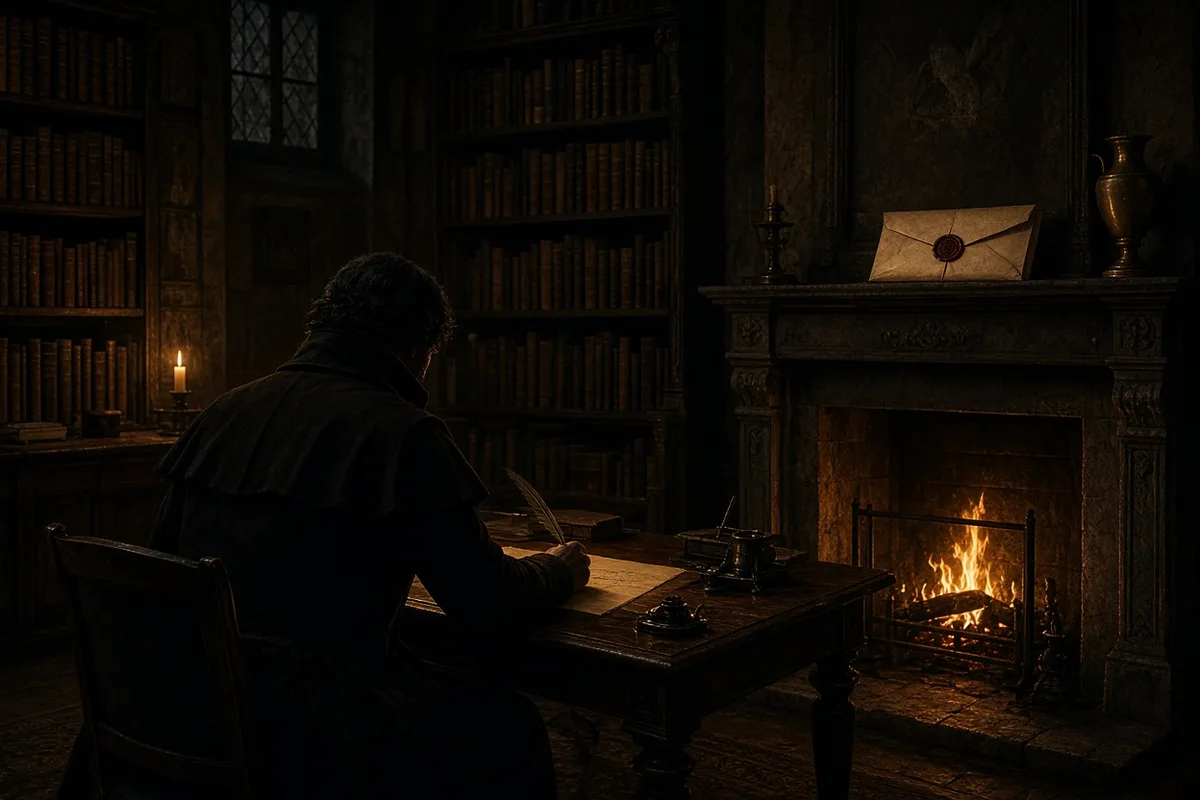
By the spring of 1789 the evidence books had grown to twelve volumes. On 12 May he rose in the Commons at half past four in the afternoon and spoke for three hours and fifteen minutes, citing the sworn testimony of surgeon Alexander Falconbridge who had served on the ship Alexander in 1786 and recorded that 132 of the 380 Africans taken on board at Bonny died before the vessel reached Antigua. Members on the government benches interrupted twice to ask for page references; Wilberforce turned to the marked passages and read Falconbridge’s words verbatim. When the division was called at ten minutes past eight the motion to bring in a bill was lost by 88 votes to 163, yet the petitions delivered that week numbered 276 and bore 51,324 signatures.
The following winter Clarkson travelled again, this time to Manchester where 10,639 names were collected on a single petition presented on 9 February 1790. Wilberforce met Clarkson at the Thatched House Tavern on St James’s Street the evening before the presentation and asked him to verify the arithmetic of the signatures column by column. Clarkson answered that the count had been performed twice by the committee of the Manchester Society for the Abolition of the Slave Trade. Wilberforce then dictated a letter to the Bishop of London, Beilby Porteus, requesting that the clergy be asked to preach on the subject on the following Sunday. Porteus replied that twenty-seven sermons were delivered across the diocese that weekend.
The war with France in 1793 brought new delays. Wilberforce noted in his diary on 3 February 1794 that Pitt had told him the Cabinet could not consider the trade while the fleet remained short of seamen; the press gangs had already taken 2,184 sailors from the merchant service in the preceding six months. Nevertheless the committee continued to sit. On 18 April 1797 Wilberforce moved twelve resolutions condemning the trade; the House carried the first by 87 votes to 84 after a debate that lasted until twenty minutes past two in the morning. The remaining resolutions were postponed when news arrived that the French had captured the island of St Lucia.
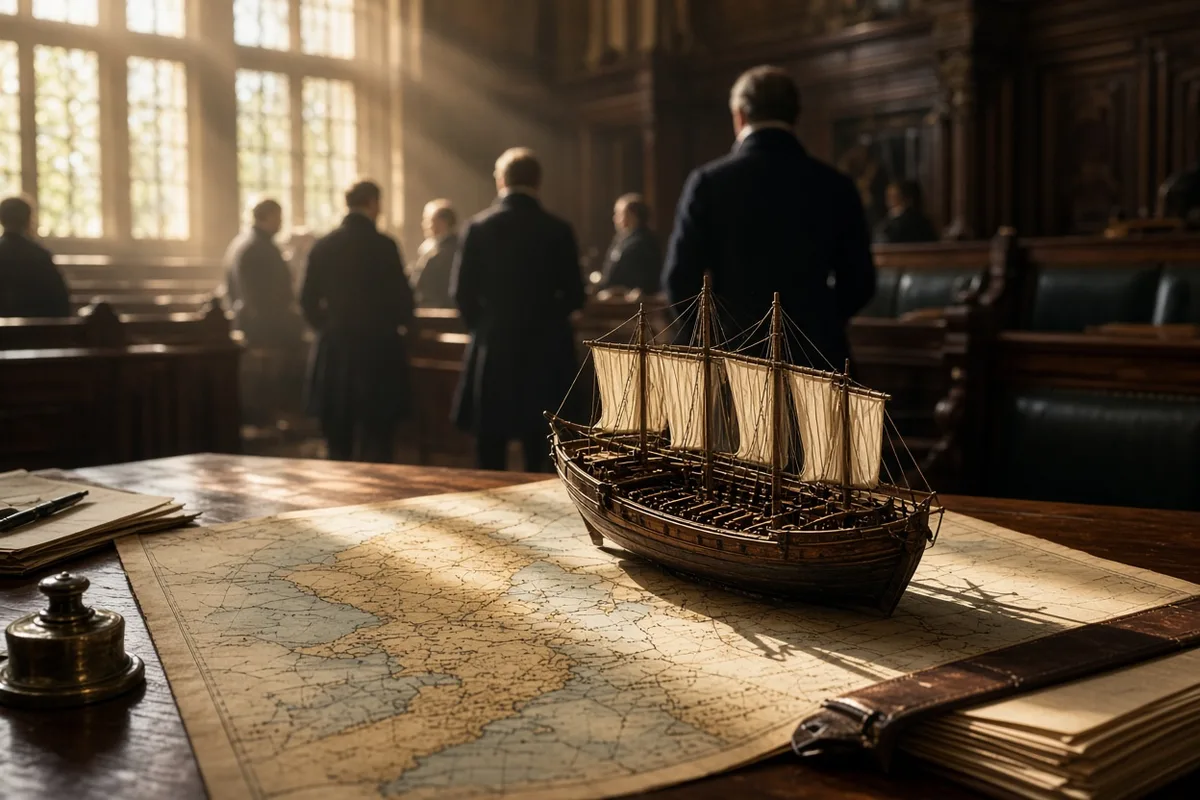
In March 1807 the bill for the abolition of the trade finally passed both Houses. On 25 March the Lords gave their assent by a vote of 100 to 34. Wilberforce received the news at Kensington Gore where he had gone to visit his sister. He walked the length of the garden twice before returning indoors and writing to James Stephen that the statute would take effect on 1 May 1808. Stephen answered from his chambers in Lincoln’s Inn that the first vessel to sail under the new prohibition would be the Margaret, cleared from Liverpool on 2 May with a cargo of cotton goods rather than shackles. Wilberforce kept that letter folded inside the evidence book marked “Volume VII – Surgeons’ Logs.”
After the 1807 Act he turned to the question of the captured Africans landed at Sierra Leone. The settlement at Freetown received 1,991 people between 1808 and 1815 under the superintendence of Governor Charles MacCarthy. Wilberforce corresponded with MacCarthy on the establishment of schools; in a letter of 12 June 1814 he enclosed a draft curriculum prepared by the Church Missionary Society and asked that instruction begin with the Gospel of Luke. MacCarthy replied that 347 children were already enrolled by the end of that year. Wilberforce visited the colony’s agent in London, Zachary Macaulay, at the African Institution offices on 3 March 1819 and examined the latest quarterly return showing 612 acres under cultivation by the liberated population.
His own strength declined after the death of his youngest daughter in 1821. On 24 July 1833 he was carried into the House of Commons on a stretcher to hear the final reading of the Slavery Abolition Bill. The division gave 283 votes in favour and 88 against. Four days later, on 29 July, he lay in the bedroom at Cadogan Place and asked his son William to read aloud the fourteenth chapter of John. The reading finished at twenty minutes to eleven in the evening; Wilberforce then asked whether the messenger had returned from the Colonial Office with news of the royal assent. The messenger arrived at half past eleven with word that the bill had received the signature of William IV that afternoon. Wilberforce closed his eyes and did not speak again. His body was taken to Westminster Abbey on 3 August and placed in the north transept beside the grave of Pitt.
The north transept received the coffin at eleven o’clock on the morning of 3 August 1833. Dean Ireland read the opening sentences from the Book of Common Prayer while the choristers of the Abbey sang Croft’s setting of Psalm 39. Among those present were Sir Robert Inglis, who had moved the resolution for the public funeral, and Thomas Fowell Buxton, who stood at the head of the pew occupied by the family. The pallbearers included the Duke of Wellington and the Earl of Harrowby. After the committal the verger closed the ledger entry recording the interment with the notation “aged 73 years, member for Yorkshire 1784–1812.”
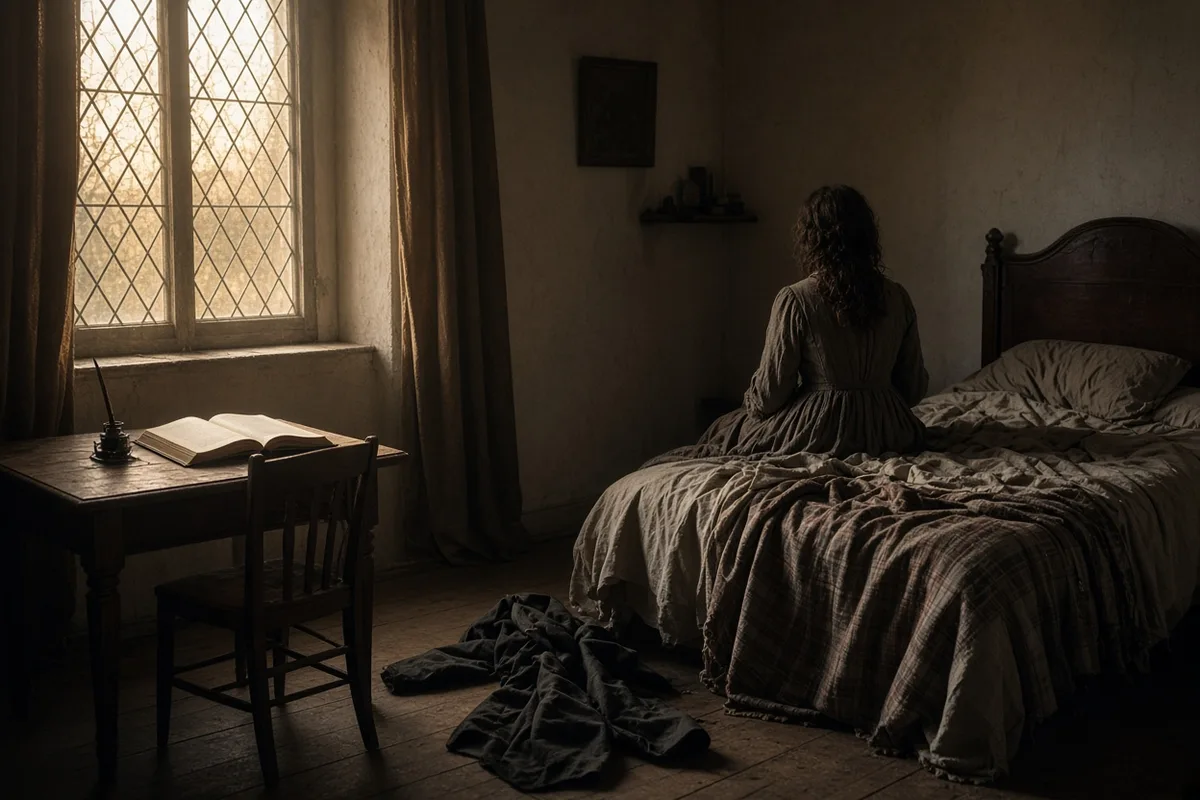
Two months later the executors opened the will at the chambers of John Venn in Threadneedle Street. The document, dated 19 April 1831, directed that any residue after payment of debts be applied to the African Institution and the Church Missionary Society. William Wilberforce the younger received the library at Kensington Gore together with the twelve volumes of evidence books; Samuel Wilberforce received the correspondence with Newton and the Bible carried from Cambridge. The codicil added on 12 June 1833 specified that the African Institution should receive the sum of £500 for the support of the schools at Freetown.
In 1840 the Dean and Chapter consented to the erection of a marble statue by Samuel Joseph on the north side of the nave. The inscription, approved by the family, reads “To the memory of William Wilberforce, by whose exertions the African slave trade was abolished in 1807 and slavery itself in 1833.” Joseph worked from the death mask taken at Cadogan Place and from the portrait by Sir Thomas Lawrence now hanging in the National Portrait Gallery. The figure stands eight feet six inches high on a plinth of Aberdeen granite.
Samuel Wilberforce, then rector of Brighstone, published the first volume of his father’s correspondence in 1840 through John Murray in Albemarle Street. The edition contained 312 letters, among them the note from Pitt dated 14 July 1808 and the reply from MacCarthy dated 19 August 1814. A second volume followed in 1842. The royalties, £1,147 6s 4d, were paid directly to the Church Missionary Society station at Regent’s Town, Sierra Leone.
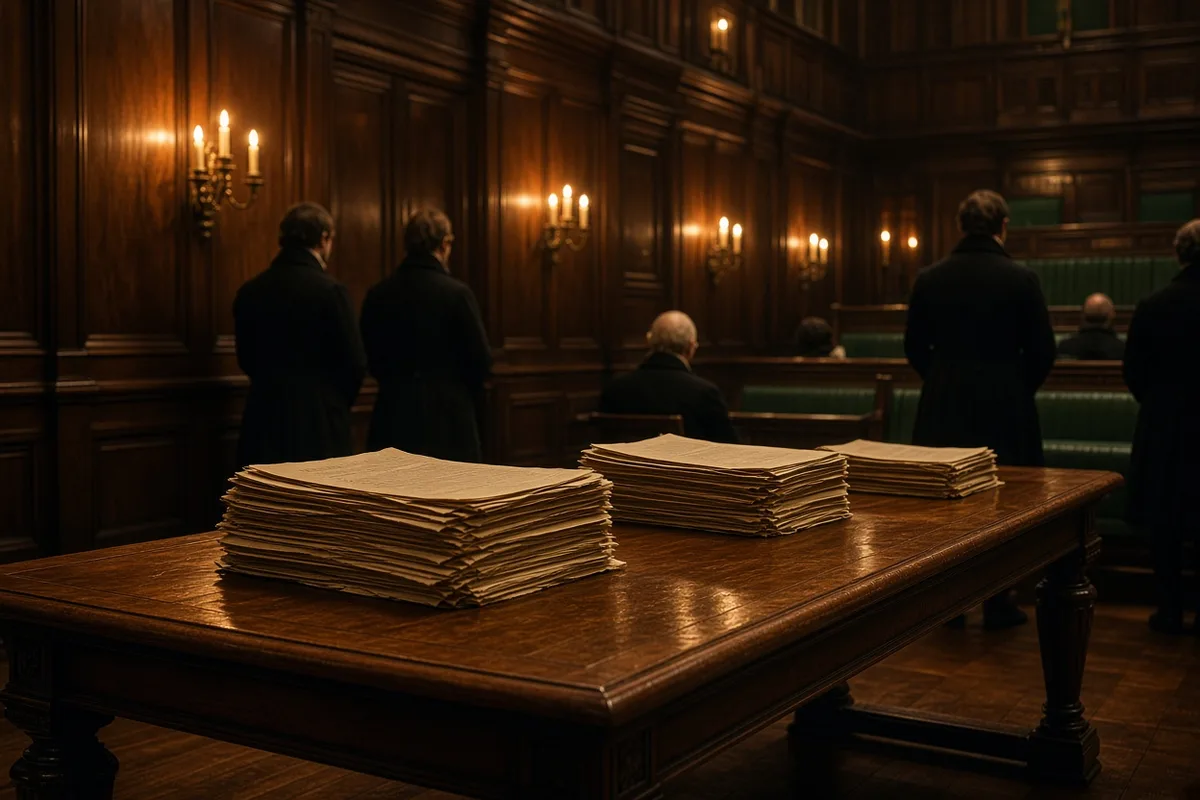
On 24 July 1863 the African Aid Society held its annual meeting at the London Tavern in Bishopsgate. The secretary read aloud a letter from David Livingstone, written at Shupanga on 12 May, stating that copies of the 1807 Act had been posted at the customs house in Quelimane and that the Portuguese authorities had released 47 captives from the hold of the brig Flor de Moçambique. The society voted to send £200 to the settlement at Freetown for the purchase of additional school slates.
Zachary Macaulay’s grandson, Thomas Babington Macaulay, visited the Abbey on 2 February 1850 and copied into his diary the exact wording of the epitaph on Wilberforce’s monument. He noted the presence of the grave of Pitt immediately adjacent and recorded that the verger had pointed out the bench outside Newton’s vestry door where the attendant had waited in 1785. Macaulay returned the following week with his niece, who placed a small bunch of winter heliotrope on the ledger stone.
In the spring of 1897 the Wilberforce family presented the original evidence volumes to the British Museum. The twelve calf-bound books, each stamped with the date of receipt on the flyleaf, were placed in the manuscript saloon under glass case number 47. The volume marked “Surgeons’ Logs” still contains Pitt’s letter of 14 July 1808 folded between pages 214 and 215.
On 28 July 1933 the Colonial Secretary, Sir Philip Cunliffe-Lister, unveiled a bronze tablet in the Abbey cloister recording the centenary of the Slavery Abolition Act. The tablet lists the names of the twelve members of the 1787 committee, beginning with Wilberforce, Clarkson, and Sharp. After the ceremony the Dean conducted a small party to the north transept where the youngest great-grandson, William Wilberforce of Markington, aged nine, placed a wreath of laurel on the original ledger stone.